May 21, 2026
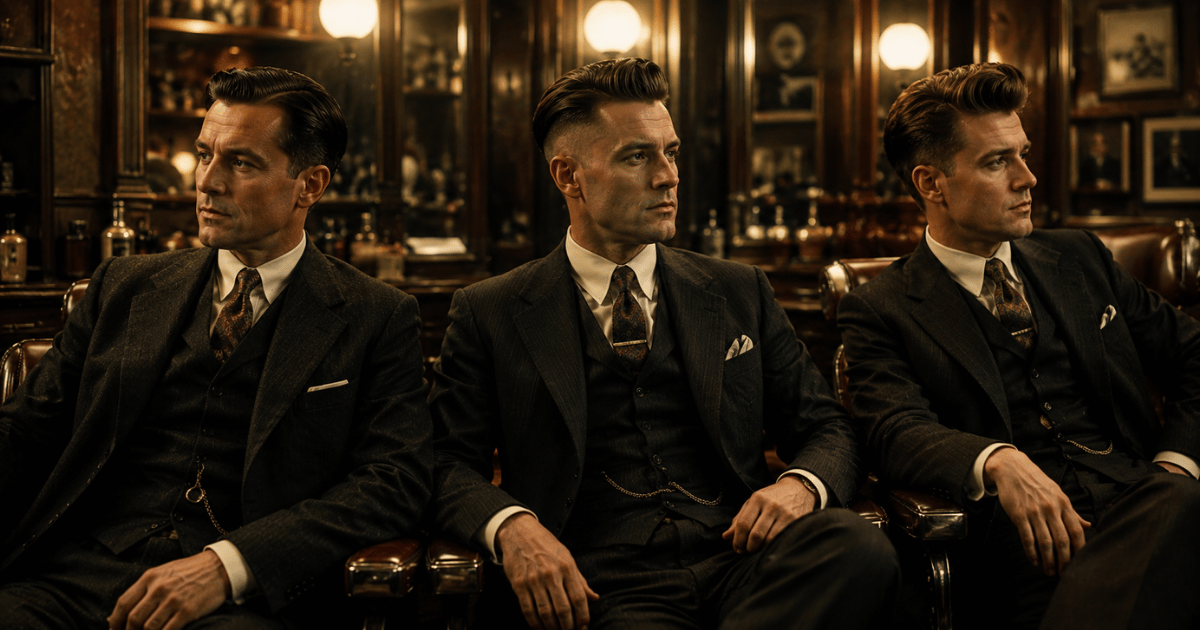
Most men walk into a barbershop asking for a fade or a textured crop. But nearly every popular style they request traces back to one decade: the 1920s.
The most popular haircuts for men in 1920s included the slicked-back side part, centre part, undercut, pompadour, and buzz cut. Men kept hair short on the sides and longer on top, styled flat with Brilliantine pomade for a glossy, refined finish.
These styles are everywhere again. Peaky Blinders brought the 1920s undercut back into mainstream fashion, and Gatsby-themed events keep the slick back in constant demand. A century later, the same cuts still define what it means to look sharp.
At HQ Barbershop, we specialise in both classic and modern styles, helping Dallas men achieve timeless looks through our expert men’s haircut service. Our barbers blend vintage techniques with today’s precision tools to recreate these iconic styles.
In this blog, we’ll cover the 10 most popular 1920s hairstyles, the grooming trends that defined the era, and how to wear these looks confidently in 2026.
Why 1920s Men’s Hairstyles Still Influence Modern Grooming
The 1920s changed everything about how men presented themselves. Before this decade, most men kept simple, unstructured hair with little attention to styling. Then the Jazz Age hit. Suddenly, grooming became a statement.
Prohibition-era speakeasies, Hollywood’s first golden age, and the rise of jazz culture created a new kind of man. Sharp suits. Polished shoes. And hair that looked like it belonged on a magazine cover. Actors like Rudolph Valentino and Douglas Fairbanks set the standard. Gangsters like Al Capone made the undercut iconic. F. Scott Fitzgerald turned the centre part into a symbol of literary cool.
But why are these styles back in 2026?
One word: Peaky Blinders. The show single-handedly revived the 1920s undercut and slick back for a new generation. Gatsby-themed weddings and vintage fashion events keep the demand constant. And the core principle behind 1920s grooming, clean lines, precision cuts, and a polished finish, never really went out of style.
That is exactly what we build our work around at HQ Barbershop. Our “grooming with excellence” philosophy mirrors the same standards that defined the Roaring Twenties. Every men’s haircut we deliver blends that timeless discipline with modern techniques. The tools have changed. The standard has not.
10 Most Popular Haircuts for Men in 1920s
These ten styles defined a decade. Some were worn by Wall Street bankers. Others by jazz musicians and bootleggers. All of them still hold up today.
1. The Slicked-Back Side Part

This was the signature look of the 1920s gentleman. Hair parted on one side, combed flat against the head, and held in place with pomade. Every businessman, banker, and politician wore some version of it.
The side part worked because it was clean, professional, and easy to maintain under a hat. Men would visit their barber every two to three weeks to keep the length right and the part sharp. The left-side part was more common, but some men parted on the right, depending on their natural growth pattern.
How to wear it today: Ask your barber for a low fade on the sides with a defined hard part. Use a medium-hold pomade for shine, or a matte clay if you prefer a modern finish. This cut suits almost every professional setting and pairs well with both casual and formal outfits.
2. The Centre Part (Middle Part)

F. Scott Fitzgerald made this look famous. Hair parted straight down the middle, slicked flat on both sides, creating a symmetrical and balanced appearance. It gave off an intellectual, artistic vibe that separated the literary crowd from the corporate one.
The centre part required medium-length hair, usually five to seven inches on top. Men combed each side down and slightly back, using Brilliantine to keep everything locked in place. The result was a polished, almost sculptural look.
How to wear it today: The middle part has made a strong comeback, especially among younger men. Keep the top at medium length and use a light-hold product. Skip the heavy shine of Brilliantine. A natural, slightly textured finish looks more current while keeping the vintage feel alive.
3. The Slick Back

No part. No side. Just all hair combed straight back from the forehead to the crown. This was the most practical style of the 1920s because it sat perfectly flat under fedoras, bowlers, and flat caps.
Hat culture dominated the decade. Men wore hats outdoors without exception, and the slick back meant you could remove your hat at a dinner table without looking dishevelled. The style earned nicknames like “patent leather hair” and “helmet head” because of how flat and shiny it looked.
How to wear it today: Pair the slick back with a mid or high fade for a sharper, more modern silhouette. A strong-hold pomade gives you the classic glossy finish, while a matte product creates a softer, more textured version. At HQ Barbershop, our men’s haircut service tailors this style to your hair type and face shape.
4. The Undercut (Gangster Cut)

This is the one everyone recognises from Peaky Blinders. Short or shaved sides with noticeably longer hair on top, creating a bold disconnect between the two lengths. It was the rebellious haircut of the 1920s.
Gangsters and members of organised crime circles popularised this look. Al Capone wore a version of it. The style broke away from the clean, conservative side parts of the upper class and signalled something edgier. The contrast between the cropped sides and the styled top made it impossible to ignore.
How to wear it today: Ask your barber for a disconnected undercut with a skin fade. The modern version keeps the same dramatic contrast but uses clipper techniques that did not exist in the 1920s. Our clipper cut in Dallas follows a precise process to get this look right, starting with a consultation about how much disconnect you want.
5. The Buzz Cut

Short. Clean. Zero maintenance. The buzz cut was the working man’s haircut of the 1920s, popular with labourers, soldiers, and anyone who did not have time for pomade and combs.
The style reflected the practical, no-nonsense energy of the era. While the upper class spent time perfecting their slick backs, working-class men kept things simple. The buzz cut also gained traction in military circles, where regulation demanded short, uniform hair.
How to wear it today: The buzz cut has not changed much in a century. Ask for a number two or three guard all over, or go shorter for a more aggressive look. It works on every hair type, hides thinning hair well, and requires almost no daily styling. Ten minutes in the barber’s chair and you are done.
6. The Taper Fade

The taper was already gaining popularity in the 1920s, though it looked different from today’s version. Sides gradually shortened from the top of the head down to the ears and neckline, while the top stayed long enough to comb and style.
Barbers in the 1920s used scissors and manual clippers to create this gradual transition. The result was subtler than a modern fade but followed the same principle: shorter at the bottom, longer at the top, blended smoothly in between.
How to wear it today: The low taper fade is almost identical to its 1920s ancestor. The main difference is precision. Modern electric clippers allow barbers to create smoother, more exact gradients than scissor work ever could. Pair it with a side part or slick back on top for a look that bridges both eras perfectly.
7. The Pompadour

Height. Volume. Confidence. The 1920s pompadour pushed hair up and back from the forehead, creating a wave of volume that stood several inches above the scalp. It was bold, attention-grabbing, and not for the timid.
This style predated Elvis by three decades. In the 1920s, men achieved the height using heavy pomade and careful combing. The sides stayed flat and close to the head, making the volume on top stand out even more. Jazz musicians and entertainers favoured this look because it commanded a room.
How to wear it today: A modern pompadour uses a blow dryer for lift instead of relying purely on product weight. Start with a proper hair wash to remove buildup, then blow dry the top section upward and back. Finish with a matte pomade for texture. The result is lighter, more natural, and easier to maintain than the original.
8. The Finger Wave

S-shaped waves pressed into the hair using fingers, a comb, and setting lotion. This technique created a sculptural, almost artistic pattern across the head. Most people associate finger waves with women’s fashion, but men wore them too.
In Black communities and among jazz musicians, finger waves carried cultural significance. Artists like Duke Ellington and Louis Armstrong styled their hair with waves that reflected the rhythmic, creative energy of the music they played. The style took skill and patience to achieve, which made it a mark of someone who cared deeply about their presentation.
How to wear it today: Finger waves require a wave cap, pomade, and a good amount of brushing. The style works best on shorter hair with natural curl or texture. Modern wave culture, especially the 360 wave movement, traces its roots directly back to this 1920s technique.
9. The Executive Cut

Think of this as the 1920s version of the boardroom haircut. A neat, slightly off-centre part with hair combed back on both sides. Conservative. Professional. The kind of cut that said “I manage things” without a word being spoken.
Office workers, bankers, and government officials wore the executive cut daily. It paired perfectly with three-piece suits and ties. The style demanded regular barber visits to keep the length right and the neckline clean.
How to wear it today: The modern executive cut is essentially a classic taper with a side part. Keep the top at two to three inches, blend the sides with a scissor taper, and use a light pomade. If you already like the Ivy League or gentleman haircut, the 1920s executive cut is its direct ancestor.
10. The Curly Coif

Not every man in the 1920s had straight hair. Men with natural curls or waves embraced their texture, keeping length on top and slicking curls back with pomade. The result was a controlled but textured look that showed off natural volume.
Actors, athletes, and musicians popularised this style. It projected confidence and distinction. The curls added personality to what was otherwise a very structured era of grooming. Rather than fighting their hair type, these men worked with it.
How to wear it today: Embrace your natural texture. Use a light-hold curl cream or mousse instead of heavy pomade. Keep the sides tapered or faded and let the top do the talking. A diffuser attachment on your blow dryer helps define curls without creating frizz.
1920s Facial Hair and Grooming Trends
Hair was only half the story. The way men groomed their faces in the 1920s shaped modern barbershop culture just as much as the haircuts did.
The pencil-thin moustache ruled the decade. Men trimmed their moustaches down to a narrow line just above the upper lip, barely wider than a pencil. Clark Gable and Vincent Price later made this look iconic in Hollywood, but the style started in the 1920s. Keeping it sharp required regular visits to a barber with a steady hand and a straight razor.
If you want to try this look, check out our guide on how to trim a moustache properly for the technique and tools you need.
Sideburns stayed short and tightly groomed. Men blended them into the short hair at the temples for a clean transition. Nothing bushy. Nothing wild. Just neat lines that matched the precision of the haircut above them.
Full beards were rare. The decade saw a massive shift toward clean-shaven faces, driven by one invention: the safety razor. Gillette had patented the disposable blade razor in 1904, but the 1920s made it a household staple. Younger men especially preferred the smooth, refined look that came with a fresh shave.
Barbershops played a central role in this grooming culture. A visit was not just about the haircut. Men sat for hot towel facials, straight razor shaves, and beard shaping as standard services. That tradition has not gone away.
At HQ Barbershop, we offer the same experience. Our moustache trim in Dallas service follows the same meticulous approach barbers used a century ago. We also provide expert face shave and beard trim services using hot towels and straight razors, just as barbers did in the Roaring Twenties.
For men who keep both a moustache and beard, our guide on how to trim a moustache with a beard walks through the full process.
What Hair Products Did Men Use in the 1920s?
Modern styling products owe everything to the 1920s. That decade turned men’s hair care from an afterthought into an industry.
Brilliantine was the king of 1920s grooming. This oil-based product gave hair a wet, glossy shine and kept it flat against the scalp all day. Men applied it generously, combing it through damp hair before styling. The downside? It left a greasy residue on everything. Housewives placed lace doilies on the backs of chairs and sofas specifically to protect furniture from men’s oily heads. That is where the tradition of antimacassars came from.
Hair tonic was the lighter alternative. It gave mild hold and a subtle shine without the heavy slick of Brilliantine. Barbershops applied it after every cut as a finishing touch.
Petroleum jelly was the budget option. Men who could not afford Brilliantine used it to achieve the same flat, shiny look. It worked, but cleaning it out was a nightmare.
Beeswax pomades offered stronger hold for styles that needed more structure, like the pompadour. These were thicker, harder to apply, but kept hair in place through long days and windy weather.
The “patent leather hair” look that defined the decade came from these products. Hair sat so flat and shiny that it resembled polished leather. Some people called it “helmet head” because it looked like the hair was moulded onto the skull.
Today’s products are lighter, easier to wash out, and far more versatile. Matte clays, water-based pomades, and texturising sprays give you the same structure without the grease. At HQ Barbershop, we use professional-grade products and can recommend the right one for your hair type and the style you want.
How to Get a 1920s Haircut at a Barbershop Today
Wanting a 1920s-inspired look is one thing. Knowing how to communicate it to your barber is another. Walk in with the right words and a reference photo, and you will walk out looking like you belong in a jazz club.
What to Tell Your Barber
Skip the vague requests. “Give me something vintage” does not help your barber much.
Be specific. If you want the Peaky Blinders undercut, say: “I want a disconnected undercut with a skin fade on the sides and about four inches on top.” If you want a classic side part, say: “Low fade, hard part on the left, and enough length on top to comb back.”
Bring a reference photo. Even the best barber cannot read your mind. A picture from Pinterest, Instagram, or even a film screenshot gives your barber an exact target to work toward. Show the front, the side, and the back if possible.
Tell your barber about your daily routine too. A high-maintenance pompadour looks incredible, but if you spend five minutes on your hair each morning, a simpler side part might serve you better. A good barber will adapt the style to fit your lifestyle.
Modern Twists on 1920s Classics
Today’s barbers have tools and techniques that 1920s barbers could only dream of. The result? Vintage styles that look even sharper than the originals.
Skin fades replace the old scissor taper. In the 1920s, barbers blended the sides gradually using scissors and manual clippers. Modern electric clippers create a tighter, cleaner gradient that gives the same effect with more precision.
Hard parts replace comb parts. A 1920s gentleman created his side part with a comb and pomade. Today, your barber can shave a thin line into the hair with a trimmer, creating a permanent, razor-sharp part that holds its shape all day.
Matte products replace Brilliantine. The flat, shiny finish of the 1920s has given way to textured, natural-looking holds. You get the same structure without the greasy residue.
At HQ Barbershop, our team specialises in blending classic and contemporary techniques. Whether you want a faithful 1920s recreation or a modern twist on a vintage style, book your appointment through our contact page and let us build the look together.
Which 1920s Hairstyle Suits Your Face Shape?
Not every 1920s style works on every face. The right match depends on your bone structure, jawline, and proportions. Here is a quick guide.
Round Face
You need height. The side part and pompadour are your best options from the 1920s catalogue. Both add vertical volume on top, which elongates a round face and creates the illusion of a slimmer profile. Avoid the buzz cut or anything too short all over, as it emphasises the roundness.
For more options, read our full guide on best haircuts for men with round faces.
Square Face
Strong jawlines look great with styles that soften the angles. The slick back and centre part both work well because they draw attention upward and away from the jaw. A taper fade on the sides keeps things balanced without adding bulk at ear level.
See our detailed breakdown of men’s square face haircuts for more ideas.
Oval Face
Lucky you. The oval face shape works with almost every 1920s style. Slick back, side part, undercut, pompadour, even the buzz cut. Oval faces have naturally balanced proportions, so very few cuts look wrong. Pick the style that matches your personality and daily routine.
Heart-Shaped Face
A wider forehead and narrower chin mean you want styles that add width at the sides or draw attention to the mid-face. The executive cut works well here because it keeps volume moderate and balanced. Finger waves also suit this shape because the horizontal lines create visual width.
Our guide on best haircuts for heart-shaped face men goes deeper into the options.
Long or Oblong Face
Avoid anything that adds height on top. The pompadour and tall side part will make a long face look even longer. Instead, go for the buzz cut or a short taper fade. These styles add the perception of width and keep the overall proportions balanced.
For a complete face shape analysis, check our guide on haircuts for different face shapes.
Conclusion
The 1920s produced some of the sharpest, most enduring haircuts in men’s grooming history, and a century later, they still hold up in any room you walk into. Whether you want the clean authority of a side part, the boldness of an undercut, or the Gatsby-era cool of a slick back, these styles are built to last.
At HQ Barbershop, we specialise in exactly this kind of work. Our barbers combine vintage techniques with modern precision tools to deliver 1920s-inspired cuts that look sharper than ever in 2026. Every visit includes a personalised consultation so the style fits your face shape, hair type, and daily routine.
The right haircut changes how you carry yourself. Make yours count.
Book your appointment at HQ Barbershop today.
Frequently Asked Questions
Question: What was the most common men’s haircut in the 1920s?
Answer: The slicked-back side part was the most widespread style of the decade. Men parted their hair on one side, combed it flat against the head, and held everything in place with Brilliantine pomade. It worked perfectly under the hats that men wore everywhere during that era. Barbers trimmed and shaped it every two to three weeks to keep the part sharp and the length right.
Question: What is the Peaky Blinders haircut called?
Answer: It is called a disconnected undercut. The style features shaved or very short sides with noticeably longer hair left on top, creating a sharp contrast between the two lengths. This was originally the gangster cut of the 1920s, worn by figures like Al Capone before the show made it famous again. If you want this look, ask your barber for a clipper cut with a skin fade and a disconnected top.
Question: What hair products did men use in the 1920s?
Answer: Brilliantine was the most popular product, an oil-based formula that gave hair a wet, glossy finish and kept it flat all day. Men also used hair tonic for a lighter hold and petroleum jelly as a budget alternative. Some used thick beeswax pomades for styles that needed more structure, like the pompadour. Today’s water-based pomades, matte clays, and styling waxes give the same hold without the heavy grease.
Question: Did men have beards in the 1920s?
Answer: Full beards were rare in the 1920s. The decade favoured clean-shaven faces and pencil-thin moustaches, driven largely by the widespread adoption of the safety razor. Younger men especially preferred the polished, smooth look that a fresh shave delivered. If you want to recreate that sharp 1920s facial hair style, our moustache trim service gives you exactly that precision.
Question: How do I ask my barber for a 1920s hairstyle?
Answer: Be specific rather than vague. For a classic look, say “low fade with a hard part on the left and enough length on top to comb back.” For the gangster style, say “disconnected undercut with a skin fade and four inches on top.” Always bring a reference photo from a film, Pinterest, or Instagram so your barber has a clear target. You can book your appointment and our barbers will guide you through the rest.