August 22, 2026
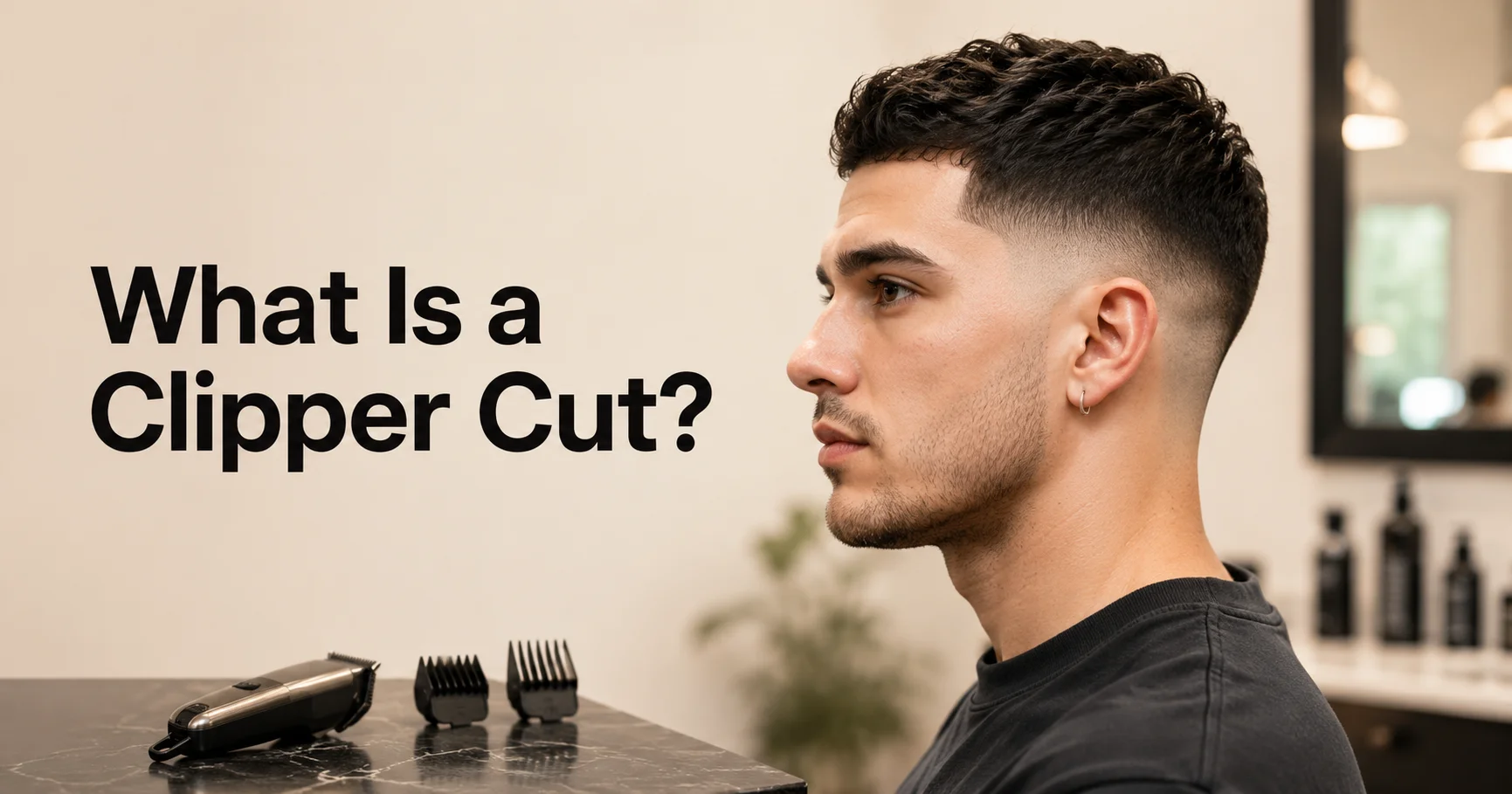
A clipper cut is a haircut a barber shapes with electric hair clippers instead of scissors. We attach a numbered guard to set the length, then run the clippers through your hair for a fast, even, low-maintenance finish. It’s the base technique behind fades, buzz cuts, tapers, and most short men’s styles.
At HQ Barbershop in Oak Lawn, Dallas, the clipper cut is one of the most requested services we do. Our barbers bring decades of combined experience with clippers, so we put this guide together to explain how the technique works, what the guard numbers mean, and which styles depend on it.
Here’s what we cover: how a clipper cut works, the full guard-length chart, the common styles, and how to keep yours sharp between visits.
How a clipper cut works

Hair clippers use two sets of small blades that slide across each other and cut hair as it passes between the teeth. Hair clippers have done this same job since the late 1800s, first by hand, now with an electric motor.
The length comes from the guard. A guard is a plastic comb that clips onto the blades and lifts the hair to a set height before the clippers reach it. Snap on a longer guard, keep more hair. Snap on a shorter one, take more off.
Our barbers rarely use just one guard. We blend two or three lengths on the same head, short on the sides, longer up top, with a smooth transition between them. That blend is what turns a flat, one-length cut into a proper fade.
Clipper guard numbers explained
Guard numbers are the language of a clipper cut. When you ask for “a number 2 on the sides,” you’re naming an exact length. Here’s what each standard guard leaves behind.
| Guard number | Hair length (inches) | Hair length (mm) |
| #0.5 | 1/16 inch | 1.5 mm |
| #1 | 1/8 inch | 3 mm |
| #2 | 1/4 inch | 6 mm |
| #3 | 3/8 inch | 10 mm |
| #4 | 1/2 inch | 13 mm |
| #5 | 5/8 inch | 16 mm |
| #6 | 3/4 inch | 19 mm |
| #7 | 7/8 inch | 22 mm |
| #8 | 1 inch | 25 mm |
Worth knowing: these lengths shift slightly between clipper brands, so a number 3 on one machine can run a touch longer than on another. That’s why our barbers check the guard against your hair before we commit, and why we’d rather you describe the look you want than only give us a number. For the fade-specific detail, read our guide to the best clipper guard length for a fade.
Common clipper cuts
Most short men’s styles start with clippers. These are the ones we cut most often at HQ.
- Buzz cut: One short guard all over, usually a 1 to 3. Fast, clean, and about as low-maintenance as hair gets.
- Crew cut: Short back and sides with a little length kept at the front top, tapered down toward the neck.
- Fade: The sides drop from skin or near-skin up to longer hair with no hard line. This is the fade, and it’s the clipper work we do most. Our full fade haircut walkthrough breaks down the low, mid, high, and skin variations.
- Taper: A softer, subtler cousin of the fade, kept mainly around the edges and neckline while the rest stays fuller.
- Undercut: One uniform short length on the sides with a sharp disconnect to longer hair on top.
- High and tight: Very short sides and back with a small patch of length up top. A military classic that still turns up in the chair every week.
- French crop: Short back and sides with a blunt, textured fringe left at the front. Clippers do the sides, and we finish the top by hand.
Each of these leans on guard control and clean blending. For the full set with photos, see our breakdown of the types of clipper cuts men ask for.
Clipper cut vs scissor cut

The short version: clippers handle short, structured, uniform lengths, and scissors handle longer hair, layering, and texture.
A clipper cut is faster, usually costs less, and holds a sharp shape. A scissor cut gives more movement and works better once your hair passes an inch or so. Plenty of our cuts use both, clippers on the sides and scissors on top, for structure and flow together.
We compare the two in detail in our clipper versus scissor cut guide.
Who should get a clipper cut
A clipper cut suits you if you want a short, sharp look with little daily styling. It’s a strong pick for thick or coarse hair, for anyone who likes a clean, defined outline, and for guys with busy mornings who don’t want to fight their hair with product every day.
Clippers also control curly and textured hair well, cutting bulk and giving a neat edge that a scissor cut alone can’t match at short lengths.
If you like to style your hair different ways or wear it past a couple of inches, a scissor-led cut fits you better. Either way, our barbers check your hair type, face shape, and routine during the consultation before we pick a single guard.
How often should you maintain a clipper cut
Short clipper work grows out faster than longer styles, so it needs more regular visits. A skin fade looks its sharpest for about one to two weeks. A buzz or a number 2 all over holds for two to three weeks before the edges start to soften.
The rule is simple: the shorter you go, the sooner you’ll want a touch-up. Our full routine is in the guide on keeping a clipper cut fresh.
What to ask your barber
Bring three things and you’ll walk out with the cut you pictured:
- The guard number or length you want on the sides and back.
- How much length to keep on top.
- Whether you want a fade, a taper, or a clean hard line at the edges.
Not sure of the numbers? Bring a photo. Our barbers read a reference image faster than a description, and we’ll tell you straight what will work for your hair and what won’t.
Frequently asked questions
Q1: Is a clipper cut the same as a buzz cut?
Answer: No, though people mix them up all the time. A buzz cut is just one type of clipper cut, a single short guard run all over your head. The clipper cut is the broader technique behind it, and it also covers fades, tapers, crew cuts, and undercuts. Think of the buzz as one option on the menu.
Q2: Are clipper cuts cheaper than scissor cuts?
Answer: Often, yes. Clipper work moves faster than detailed scissor cutting, so it usually carries a lower price at most barbershops. That said, the cost depends on the shop and the detail involved, since a precise skin fade takes real skill. At HQ Barbershop, a men’s haircut and a skin fade both run $50.
Q3: How long does a clipper cut last?
Answer: Most clipper cuts hold their shape for one to three weeks. The shorter you go, the faster it grows out, so a tight skin fade looks its sharpest for about a week or two, while a longer guard length lasts closer to three. Book your touch-up before the edges start to soften.
Q4: Can you use clippers on long hair?
Answer: Clippers work best on shorter lengths, so they aren’t the right tool for cutting long hair on their own. For longer styles, our barbers lead with scissors to shape and layer the top, then bring in clippers only to clean up the sides, blend the neckline, and sharpen the finish.
Q5: Does a clipper cut work on curly hair?
Answer: Yes, and curly hair often responds well to it. Clippers control the bulk that curls and coils tend to build up, giving you a clean, even outline that’s easier to manage day-to-day. Our barbers adjust the guard and blend carefully, since curly hair can shrink and read shorter once it dries.
Book a clipper cut in Dallas
A clipper cut comes down to one thing: the right guard in the hands of a barber who knows how to blend it. Get that part right, and you walk out with a sharp, easy cut that still looks good three weeks later.
That’s the part we’ve spent years getting right at HQ Barbershop. Whether you want a clean buzz, a soft taper, or a skin fade with no hard lines, our barbers on Oak Lawn Avenue read your hair first, then pick the guard, not the other way around.
Bring a photo or just tell us the look. We’ll handle the rest.
Book your clipper cut in Dallas and see the difference a proper blend makes.