July 18, 2026
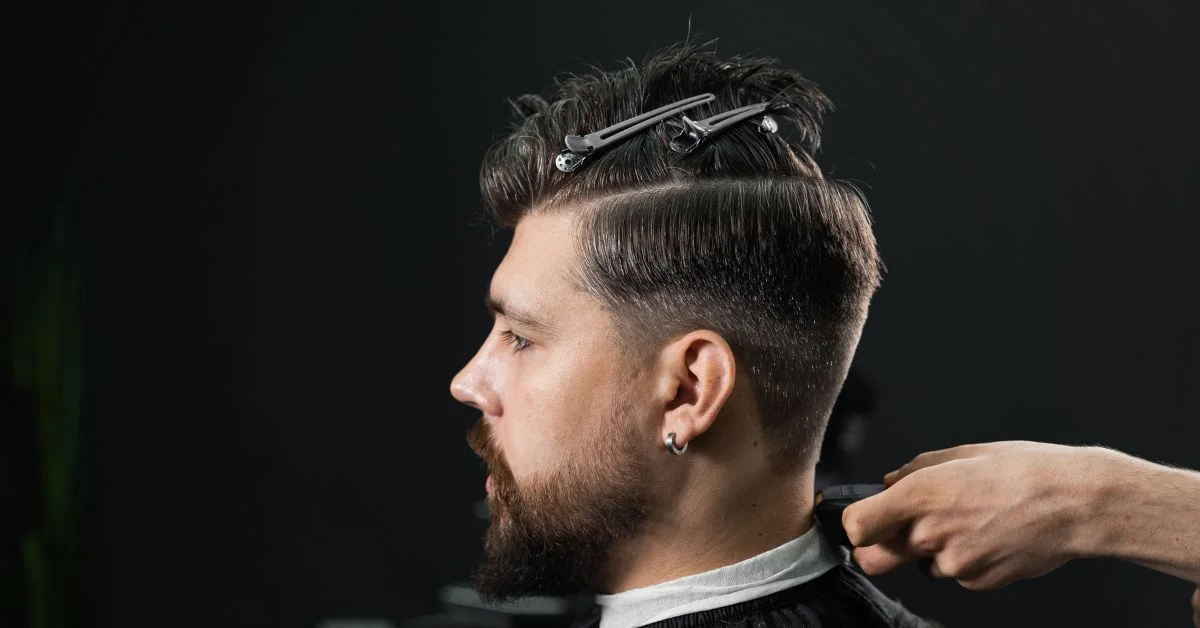
Knowing the best clipper guard length for a fade can make the difference between a sharp, balanced haircut and one that looks uneven or grows out too quickly.
The best clipper guard length for a fade depends on the style we’re creating, your hair type, and how much contrast you prefer. Most fades start with shorter guards near the neckline and blend into longer guard lengths toward the top, creating a smooth transition that suits your face shape and hairstyle.
Many men know they want a fade but feel unsure about clipper guard numbers. Whether you’re booking your first fade or trying to understand what to ask for, learning how different guard lengths work helps you make better grooming decisions.
At HQ Barbershop, we specialize in modern men’s haircuts, including expertly blended fades that match your hair texture, personal style, and daily routine. We take the guesswork out of choosing the right fade, so you leave with a clean, balanced look that grows out naturally.
In this blog, we’ll explain clipper guard numbers, compare the best guard lengths for every fade style, and help you choose the right fade for your hair type and lifestyle.
What Are Clipper Guard Lengths?

Clipper guards are plastic or metal attachments that fit over hair clippers to control how much hair is left after cutting. Each guard is identified by a number, and each number corresponds to a specific hair length.
Generally, the higher the guard number, the longer the hair is left behind.
However, guard numbers alone don’t create a fade. We use multiple guard sizes and blend between them to remove visible lines and create a gradual transition from short to long hair.
Complete Clipper Guard Length Chart
The chart below shows the most common clipper guard sizes and their approximate cutting lengths. Exact measurements may vary slightly between clipper brands, but these are the standard sizes we use.
| Guard Number | Approximate Length | Metric Length | Common Uses |
| No Guard (Closed Blade) | 1/50″ | 0.5 mm | Skin fades, bald fades, neckline cleanup |
| #0.5 | 1/16″ | 1.5 mm | Blending skin fades |
| #1 | 1/8″ | 3 mm | Tight fades, short sides |
| #1.5 | 3/16″ | 4.5 mm | Soft transition between #1 and #2 |
| #2 | 1/4″ | 6 mm | Classic fades, crew cuts |
| #3 | 3/8″ | 10 mm | Longer fades, textured sides |
| #4 | 1/2″ | 13 mm | Conservative short hairstyles |
| #5 | 5/8″ | 16 mm | Longer men’s cuts |
| #6 | 3/4″ | 19 mm | Traditional crew cuts |
| #7 | 7/8″ | 22 mm | Medium-length styles |
| #8 | 1″ | 25 mm | Longest standard guard |
What Is the Best Clipper Guard Length for a Fade?

The best clipper guard length depends on several factors, including:
- The type of fade you want. Low, mid, and high fades all start the blending action at different points on the head.
- Your hair thickness and texture. Thick or coarse hair responds differently to the same guard than fine or curly hair.
- Face shape and desired contrast. These affect where we recommend starting the fade and how bold the final look should be.
Instead of relying on one guard, we build most fades using a guard progression, gradually increasing the length from the bottom of the head upward. For example: no guard or #0.5 at the base, #1 for the lower blend, #1.5 through the middle, #2 for the upper blend, and #3 or #4 on top.
This gradual progression removes harsh lines and creates the smooth fade everyone wants.
Best Guard Length for Every Fade Style

Different fades require different guard combinations. While every barber has a unique cutting technique, these guard progressions are what we commonly use.
| Fade Style | Typical Guard Progression | Best For |
| Low Fade | #0.5 to #1 to #2 to #3 | Office-friendly, subtle style |
| Mid Fade | 0 to #1 to #2 to #3 | Balanced, modern haircut |
| High Fade | 0 to #0.5 to #1 to #2 | High contrast, bold look |
| Skin Fade | Skin to #0.5 to #1 to #2 | Sharp, clean finish |
| Taper Fade | #1 to #2 to #3 | Natural everyday appearance |
| Drop Fade | #0.5 to #1 to #2 to #3 | Curved fade around the back |
| Burst Fade | 0 to #0.5 to #1.5 to #2 | Mohawks and curly styles |
These aren’t strict rules. We adjust the guard progression based on your hair growth and head shape once you’re in the chair.
Low Fade: A Clean, Professional Choice
A low fade begins just above the ears and gradually blends into longer hair. Because the transition starts lower on the head, it creates a softer, more conservative look that works well for office and formal settings.
We pair low fades often with side parts, comb-overs, textured crops, and classic business hairstyles.
Mid Fade: The Most Versatile Option
A mid fade starts around the middle of the head, creating a balanced look that’s neither too subtle nor too dramatic. This is the style we get asked for most often.
It works especially well with pompadours, textured quiffs, French crops, short curls, and modern business styles.
High Fade: Maximum Contrast
A high fade begins much higher on the sides, leaving a bold contrast between the sides and the hair on top. Because more hair is removed, high fades need careful blending to avoid visible lines.
The higher the fade sits, the more precise the blending has to be. This is where experience matters most.
Skin Fade: The Sharpest Finish
A skin fade blends all the way down to bare skin before gradually increasing in length. We combine trimmers, foil shavers, and adjustable clippers with #0.5, #1, and #2 guards to get there.
This is what creates the ultra-clean look that has made skin fades one of the most popular men’s haircuts today.
Why We Don’t Rely on One Guard
Many first-time clients believe asking for a “number 2 fade” means we only use a #2 guard. That’s not how a proper fade works.
We rely on several techniques to build a smooth blend. Multiple guard sizes, the adjustable clipper lever, half guards, different cutting angles, scissor-over-comb blending, and detail work around the neckline and temples all come into play.
The goal isn’t simply to shorten the hair. It’s to remove every visible transition line while keeping the shape of the haircut intact.
Expert tip: the best fades are customized. Two clients asking for the same fade may leave our chair with different guard combinations, based entirely on hair density, growth pattern, and head shape.
How Hair Type Changes the Best Clipper Guard Length for Fade

Many online guides recommend the same guard numbers for everyone. The problem? Hair does not behave the same way from one person to another. The best clipper guard length for fade depends just as much on hair texture as it does on the style itself.
This is where professional advice makes a real difference.
Thick Hair
Thick hair often appears fuller after a haircut, even when shorter guards are used. Many barbers choose slightly shorter guard combinations to reduce weight while keeping the blend smooth.
A high fade or mid fade works especially well because it removes bulk from the sides without making the haircut look flat.
Fine Hair
Fine hair reveals the scalp more quickly than thicker hair. Using guards that are too short can create stronger contrast than expected, making the fade appear harsher.
Many barbers leave slightly more length on the sides by blending through #1, #1.5, or #2 guards. That extra length creates a fuller appearance without sacrificing a clean finish.
Straight Hair
Straight hair highlights every transition in a fade. Even a small blending line becomes easier to notice because the hair lies flat against the head.
That is why barbers spend extra time refining the blend with different guard lengths and clipper lever adjustments. If you have naturally straight hair, our guide to Men’s Haircuts With Straight Hair explores styles that work well with different fade combinations.
Wavy Hair
Wavy hair naturally softens the transition between guard lengths. The texture helps disguise minor differences, creating a relaxed and modern finish.
Many men combine a low fade or mid fade with textured waves because the hairstyle keeps movement on top while maintaining clean sides. If you are looking for inspiration, explore our Men’s Haircut Short Wavy guide for haircut ideas that complement wavy hair.
Curly Hair
Curly hair adds volume and shape, so barbers often adapt the fade to preserve natural curl definition. Removing too much hair with shorter guards can make the transition appear abrupt instead of balanced.
Most professionals blend gradually and leave enough length to allow the curls to sit naturally above the fade.
Coarse Hair
Coarse hair grows outward more than fine hair and often needs careful blending to avoid heavy lines. Barbers usually adjust both the guard sequence and the clipper lever throughout the haircut to soften dense areas.
Most people focus on the guard number. Experienced barbers focus on how your hair responds to every pass of the clipper. That approach produces a fade that looks clean on the day of your appointment and continues to grow out evenly over the following weeks.
Open Lever vs. Closed Lever: The Secret Behind a Perfect Fade
One of the biggest reasons a professional fade looks smoother than a DIY haircut comes down to the clipper lever, not the guards themselves.
Our clippers have an adjustable lever that changes how much hair the blade cuts without changing the guard.
- Closed lever cuts slightly shorter and creates cleaner lines.
- Open lever leaves the hair a little longer for smoother blending.
- Half-open lever bridges the gap between two guard sizes.
For example, instead of jumping directly from a #1 guard to a #2 guard, we might move through #1 closed, #1 half-open, #1 open, a #1.5 guard, then #2 closed. Those small adjustments erase harsh lines and create the soft transition that defines a quality fade.
What Are Half Guards?
Half guards, like #0.5 and #1.5, are intermediate sizes that fill the gap between standard guard numbers. Without them, the jump between a #1 and #2 can look too noticeable, especially on straight or thick hair.
We rely on half guards because they create smoother blends, reduce visible fade lines, improve precision around the temples, and produce more natural transitions. Most home clipper kits don’t include them, but they’re standard tools in our shop.
Best Fade Based on Face Shape
The most flattering fade depends on your facial proportions.
| Face Shape | Recommended Fade |
| Oval | Low, Mid, or High Fade |
| Round | High Fade with added height on top |
| Square | Mid Fade with textured top |
| Heart | Low Fade with medium-length sides |
| Diamond | Low Fade or Taper Fade |
| Oblong | Low Fade to avoid extra height |
We look beyond trends and recommend a fade that complements your natural features, not just whatever’s popular that month.
Common Fade Mistakes to Avoid
- Choosing only one guard. A fade isn’t created with a single clipper guard. It requires multiple lengths and careful blending to look right.
- Going too short too fast. Once hair is removed, it can’t be put back. We usually start with longer guards and gradually shorten as we refine the fade.
- Ignoring hair growth patterns. Cowlicks, crown swirls, and uneven growth all affect how a fade sits. We adjust our technique to work with these patterns rather than against them.
- Forgetting about maintenance. Even the cleanest fade grows out. Waiting too long between visits makes the fade lose its sharp definition.
- Copying someone else’s haircut exactly. A fade that looks great on one person may not suit another. Hair density, face shape, and head shape all shape the final result.
DIY Fade vs. Professional Fade

Learning to cut your own hair can save money, but a balanced fade takes experience, the right tools, and practice.
| DIY Fade | Professional Fade |
| Basic clipper guards | Full guard collection with half guards |
| Limited visibility | Full 360-degree view for precise blending |
| Difficult to create smooth transitions | Clean, even fades with no harsh lines |
| Higher chance of mistakes | Consistent, repeatable results |
| Best for simple maintenance | Best for complete haircuts and style changes |
If you’re maintaining an existing fade, a DIY touch-up may work fine. For a fresh style or a bigger change, booking a Haircut with us usually delivers the better outcome.
How Often Should You Get a Fade?
Fade haircuts grow out quickly because the contrast between short and long hair becomes less noticeable over time.
| Fade Type | Recommended Touch-Up |
| Skin Fade | Every 1-2 weeks |
| High Fade | Every 2 weeks |
| Mid Fade | Every 2-3 weeks |
| Low Fade | Every 3-4 weeks |
| Taper Fade | Every 3-5 weeks |
Regular trims keep your haircut looking sharp and make each appointment easier, since we have less regrowth to correct each time.
Barber Tips for Getting the Best Fade
Before your next haircut, keep these tips in mind.
- Bring reference photos to show us the style you want. A picture communicates more than a guard number ever will.
- Ask for a low, mid, or high fade instead of focusing only on guard numbers. We’ll translate that into the right progression for your hair.
- Tell us how much maintenance you’re comfortable with, since that affects which fade style makes sense for you.
- Mention any cowlicks or areas where your hair grows differently so we can plan around them.
- Trust our recommendations. We adjust guard sizes based on your hair type and head shape, not a fixed formula.
Good communication leads to better results than memorizing guard numbers alone. If you want the details handled for you every time, our Clipper Cut service keeps your fade consistent between full haircuts.
Frequently Asked Questions About the Best Clipper Guard Length for Fade
What is the best clipper guard length for a fade?
The best clipper guard length for fade depends on the style you want. Most fades begin with a #0, #0.5, or #1 guard near the neckline before blending into longer guards such as #2 or #3. Professional barbers usually combine several guard lengths instead of relying on a single number.
Is a number 1 or number 2 better for a fade?
Neither is better on its own. A #1 guard creates a shorter, higher-contrast fade, while a #2 guard leaves more hair and produces a softer transition. Your barber may use both guards in the same haircut to achieve a balanced blend.
Can you get a fade with only one guard?
You can create a basic haircut with one guard, but you cannot produce a smooth professional fade that way. A proper fade requires multiple clipper guards, clipper lever adjustments, and blending techniques to remove visible lines between different lengths.
Which fade lasts the longest?
A low fade and a taper fade usually maintain their appearance longer because they remove less hair from the sides. Skin fades look sharp immediately after the haircut but generally need maintenance sooner as the hair grows back.
Does hair texture change the clipper guard you should use?
Yes. Straight hair, wavy hair, curly hair, and coarse hair all respond differently to the same guard length. That is why experienced barbers adjust guard sizes and blending techniques to suit your individual hair rather than following one standard formula for everyone.
Final Thoughts
Choosing the best clipper guard length for fade is not about memorising one guard number. The right fade depends on your hair texture, preferred style, head shape, and how much contrast you want. A well-blended fade comes from using the right combination of guard lengths, not simply picking the shortest clipper attachment.
Your haircut says a lot before you speak. A clean fade can sharpen your appearance for work, a special event, or everyday confidence, while the wrong guard choice can take weeks to grow out. That is why spending a few minutes discussing your haircut with an experienced barber is always worth it.
HQ Barbershop Dallas specialises in personalised Clipper Cut services that match your hair type, lifestyle, and grooming goals. We take the time to understand the look you want, blend every fade with precision, and recommend a style that stays sharp between visits. If you are ready for a professional fade instead of guessing clipper guard numbers at home, book our Clipper Cut or visit us through our Google Business Profile and let us create a fade that suits you from every angle.