May 26, 2026
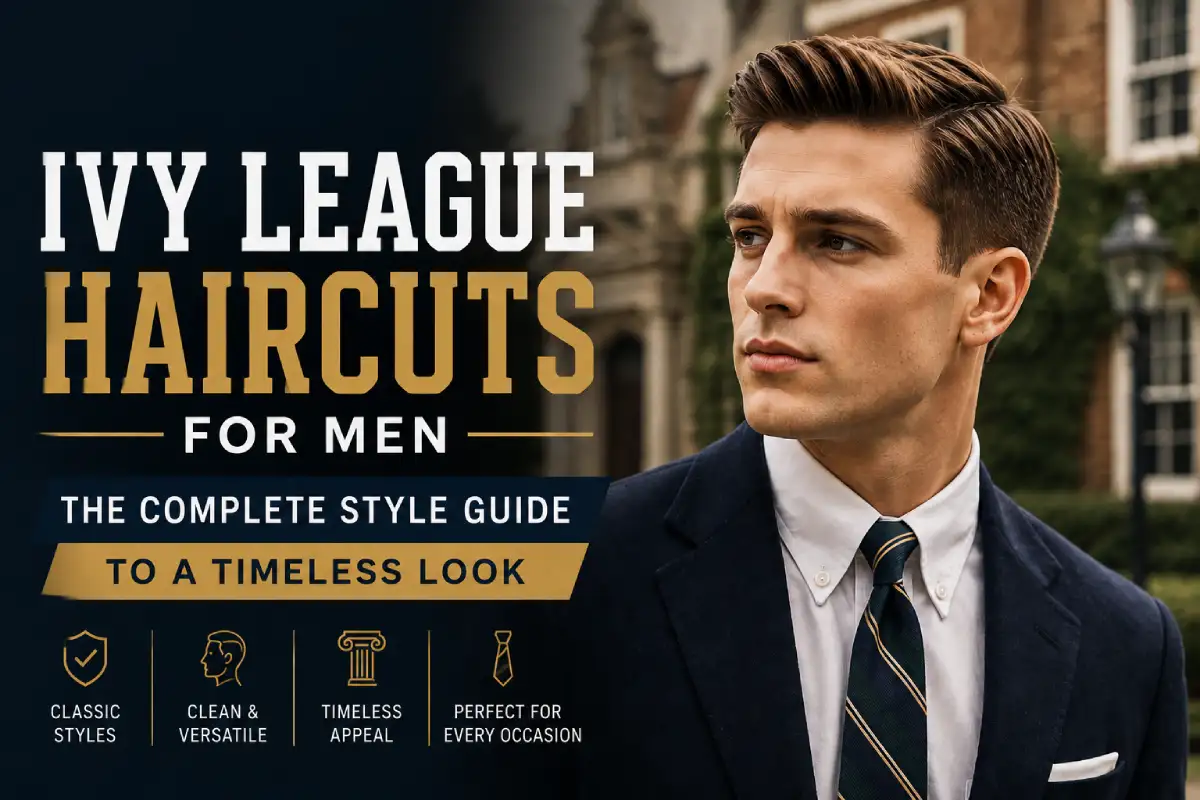
Most men spend years chasing a haircut that looks sharp in the boardroom, clean on a date, and still works on a Saturday. The ivy league haircuts for men have done exactly that since the 1950s. And it has never gone out of style.
An ivy league haircut is a refined version of the classic crew cut, featuring neatly tapered or faded sides with a longer top – typically enough length to comb into a clean side part or sweep to one side. Also known as the Princeton cut or Harvard clip, it sits perfectly between polished and relaxed, making it one of the most versatile men’s hairstyles available today.
Right now, in 2026, search interest for classic men’s cuts is surging. Men are moving away from overcomplicated styles and going back to clean, structured looks that hold up in real life. The ivy league haircut sits right at the centre of that shift.
At HQ Barbershop in Dallas, we specialise in exactly this kind of precision work. Our team of master barbers, led by Jordan Kiswani with 26+ years of experience, delivers men’s haircuts in Dallas that are tailored to your face shape, hair type, and lifestyle. Sharp. Clean. Consistent.
In this blog, we’ll walk you through everything you need to know about ivy league haircuts for men – the history, the styles, the styling tips, and how to communicate exactly what you want to your barber.
What Is an Ivy League Haircut And Why Every Man Should Know It?
The term “ivy league” comes from the group of elite American universities – Harvard, Yale, Princeton, Columbia – where the haircut became a cultural staple in the mid-20th century. Students at these schools wore it as a mark of discipline and polish. The Princeton cut and Harvard clip are simply regional nicknames for the same style.
But this cut did not stay on college campuses. By the 1960s, it had spread into offices, military circles, and mainstream culture. Today, it has made a full comeback among men who want something smart without trying too hard.
Ivy League Haircut vs Crew Cut: What Is the Difference?
This is the most common question people ask, and it matters.
A crew cut is cropped very short on top. The hair stands upright and cannot be combed flat. It is a military-style cut. Clean and strong, but not particularly versatile.
The ivy league haircut is longer on top. That extra length – usually between one and two inches – gives you the ability to sweep the hair to the side, create a defined part, or add texture. Same tapered sides. But far more flexibility with the top.
Think of the ivy league as the crew cut’s more grown-up cousin.
The Key Features of a Classic Ivy League Cut
- Tapered or faded sides and back – tight and clean, usually cut shorter than the top
- Longer top – enough length to style, typically 1 to 2 inches
- Side part or sweep – the signature styling move that defines the look
- Scissor cut on top – most barbers use scissors rather than clippers for the top portion to preserve length and texture
The result is a cut that looks professional at work and relaxed enough for everything else.
The Most Popular Ivy League Haircut Styles for Men in 2026
Not every ivy league haircut looks the same. There are several variations, and the right one depends on your hair type, face shape, and personal style. Here are the styles we see most often at our shop.
Classic Ivy League Haircut

This is the original. Neatly tapered sides, 1 to 2 inches on top, combed to the side with a clean part. No fade. No texture. Just a sharp, traditional look that works for every formal occasion.
Best for: straight or slightly wavy hair, oval and rectangular face shapes, professional settings.
Ask your barber for: scissor-cut top with a natural taper on the sides, clean side part.
Ivy League with Skin Fade

A modern update on the classic. The sides are taken down to the skin – either a high, mid, or low fade – while the top stays long enough to style. The contrast between the bare skin and the fuller top is what makes this version pop.
This is the version most men in Dallas are asking for right now. It is sharp, photographs well, and it holds its shape for two to three weeks between cuts.
Textured Ivy League Haircut

Instead of combing the top flat, this version leaves natural movement and texture in the hair. A matte clay or paste is used to separate the strands slightly, giving the cut a more casual, modern feel.
Works particularly well for men with thick or wavy hair. The texture stops the top from looking heavy.
Short Ivy League Haircut

Very close to a crew cut in length, but with just enough hair on top to brush it slightly to the side. It is the most low-maintenance version of the style. Wash and go. A quick pass with a comb and you are ready.
Best for: men who want minimal styling, thinner hair, very hot climates (Dallas summers included).
Medium Ivy League Haircut

This is the sweet spot for most men. About one to one and a half inches on top. Enough length to create a proper side part. Enough volume to add character. The sides are tapered, not faded, which gives the overall look a softer, more collegiate feel.
Ivy League with Comb Over

Not a full comb over. More of a structured sweep. The top is blown dry upward and then pushed to one side with a light pomade. The sides are faded or tapered tight. The result is a cut that looks effortlessly put together.
This style works across face shapes. It adds volume on top for men with longer faces, and the tight sides create a clean structure for men with rounder faces.
Long Ivy League Haircut

The most unconventional take on the style. The top is left noticeably longer – think two to three inches – and the sides are still tapered or faded. The longer top allows for a more dramatic side sweep or even a slight wave to show through.
Best for: men who like a bit more personality in their cut. Takes more styling time but turns heads.
Ivy League Haircut by Face Shape: How to Choose the Right Version
Face shape matters more than most men realise. A great barber adjusts the cut based on your face structure. Here is a quick guide.
Oval Face
Lucky. Oval faces suit almost every version of the ivy league cut. The classic, the textured, the skin fade, the long version. Pick based on your lifestyle, not your face shape.
Round Face
Go for a high skin fade and a bit more volume on top. The tight sides slim down the width of the face, and the height on top adds length. Avoid cuts that are equally wide on all sides.
Square Face
The ivy league pairs naturally with a square jaw. A mid fade with a textured top softens the strong angles without hiding them. This face shape actually benefits from a bit of structure.
Oblong or Long Face
Keep the sides slightly fuller and the top more compact. A short to medium ivy league works best here. Avoid adding too much height – it makes a long face look even longer.
Diamond Face
Strong cheekbones, narrower forehead and jaw. A medium ivy league with natural taper suits this shape well. Avoid extremes in length – balance is the goal.
Ivy League Haircut by Hair Type: What Works and What Does Not
Your hair type determines how the cut behaves after you leave the barber chair. Here is what you need to know.
Straight Hair
This is the ideal texture for the classic ivy league. Hair lies flat, parts cleanly, and holds its shape with minimal product. A light pomade or even just water is enough to style it each morning.
Wavy Hair
Wavy hair works brilliantly for the textured version of the cut. The natural wave adds body and movement without any extra styling effort. Ask your barber to leave a bit more length on top to let the wave develop properly.
Thick Hair
Thick hair can make the classic ivy league look a little heavy on top. A textured or skin fade version solves this. The fade removes bulk from the sides, and the texture on top breaks up the density. Ask your barber to point-cut the top to thin it out slightly.
Thin Hair
The medium ivy league with a taper – rather than a sharp fade – is the best choice for thinner hair. Avoid very short versions, as they can expose the scalp. A bit of volume-building product goes a long way.
Curly Hair
Curly hair can work with the ivy league, but it requires a skilled barber who knows how to cut curls properly when dry. The top needs to be cut at the right length to account for shrinkage. Done well, a curly ivy league looks distinctive and sharp.
How to Style an Ivy League Haircut for mens: A Step-by-Step Guide
The right cut is half the work. The styling is the other half. Here is how to do it properly.
What you need:
- A fine-tooth comb
- A hair dryer (optional but helpful)
- A light pomade or matte clay, depending on the finish you want
Step 1- Start with damp hair, not dripping wet. Towel dry after the shower until moisture is mostly out.
Step 2- Apply a small amount of product – about the size of a pea for shorter versions, slightly more for medium length. Rub it between your palms first to warm it up.
Step 3- Work the product through the top of your hair from the roots outward. Do not just run it along the surface. Get it into the roots.
Step 4- Use your comb to part the hair on the side. Most men part naturally to the left or right. Work with your natural part, not against it.
Step 5- Sweep the hair across to the side. Use the comb to flatten and smooth the top. If you want more volume, blow dry the hair upward first before sweeping it across.
Step 6- For the textured version, skip the comb after applying the product. Use your fingers to tousle the top slightly instead.
The whole process takes three to five minutes once you are used to it.
Best Products for an Ivy League Haircut for men
| Product Type | Finish | Best For |
| Light pomade | Shine, strong hold | Classic, slicked-back look |
| Matte clay | No shine, natural hold | Textured, casual versions |
| Hair paste | Medium shine, flexible hold | Comb over, medium styles |
| Sea salt spray | Textured, no hold | Wavy, beach-inspired styles |
Avoid heavy waxes or strong-hold gels for this cut. They tend to make the hair look stiff and dated.
How Long Does an Ivy League Haircut for Men Last?
Three to four weeks for most men. The sides grow out faster than the top, so the first thing that goes is the clean taper or fade. Some men book every three weeks to keep the fade tight. Others come in every four to five weeks and accept a slightly softer look toward the end of the cycle. Either works.
The classic taper version (no fade) lasts slightly longer than the skin fade because the gradual blend hides growth more naturally.
What to Tell Your Barber When Asking for an Ivy League Haircut
Most men sit down and say “ivy league” without any further detail. A good barber will ask questions. But it helps to know what you want before you walk in.
Here is the exact language to use:
- For the top: “Leave about [one inch / one and a half inches / two inches] on top. Scissor cut.”
- The sides: “Taper down / Mid fade / High skin fade.”
- Style: “I want to comb it to the side with a part” OR “leave it textured, no hard part.”
- The back: “Square off the neckline” (clean, sharp) OR “tapered neckline” (softer finish).
Bring a photo. Seriously. Even experienced barbers appreciate a reference image because terms mean different things to different people. A photo removes any room for misinterpretation.
At HQ Barbershop, we sit down with every client before touching their hair. We ask about your lifestyle, how much time you spend styling each morning, and what you want people to notice about your look. That conversation shapes every cut we deliver.
Ivy League Haircut with a Beard: Does It Work?
Yes. And it works very well.
The clean structure of the ivy league pairs naturally with a beard because the contrast between the tight sides and the fuller face creates a balanced frame. The key is proportion.
- Short beard or stubble – pairs with every ivy league variation. Clean and masculine without being heavy.
- Medium beard – works best with a high fade ivy league. The tight fade creates separation between the beard and the haircut, which prevents the face from looking overly full.
- Full beard – the classic taper ivy league (softer than a fade) works better here. Too much contrast between a skin fade and a very full beard can look disconnected.
At HQ Barbershop, our beard trim service in Dallas is designed to work alongside your haircut. When you book both together, our barbers style the beard to complement the cut – not just trim it on its own. The result is a cohesive look from the hairline down.
How Much Does an Ivy League Haircut Cost in Dallas?
At HQ Barbershop, our standard men’s haircut is priced at $50. If you want to add a beard trim to your visit, the combined service starts at $65.
For a deluxe haircut and beard trim package – which includes a hot towel treatment – the price is $75.
Walk-ins are welcome. But if you want a specific barber or a particular time slot, booking ahead guarantees your spot. You can reach us at (214) 741-1744 or book directly through our website.
Ivy League Haircut vs Gentleman Haircut: Which One Should You Choose?
Both are classic. Both are clean. But they are not the same cut. The ivy league is shorter overall, more structured, and built for low-maintenance styling.
The gentleman’s haircut tends to carry more length on top, more volume, and a slightly more dressed-up finish. If you are deciding between the two, face shape, hair type, and how much time you want to spend styling each morning all play a role.
Final thoughts
The ivy league haircut for men has been around for 70 years. It is still here because it actually works – in offices, at weekends, at weddings, and everywhere in between. Clean sides, a styled top, and a look that takes three minutes to put together each morning. There is a reason men keep coming back to it.
If you have been wearing the same cut for years, or you have never found something that suits both your face and your lifestyle, this is the style worth trying.
At HQ Barbershop at Dallas, we have been delivering precision men’s haircuts in Dallas that our clients trust and come back for. Our master barbers – many with over a decade of experience – will take the time to understand your face, your hair type, and your lifestyle before a single clipper is switched on. We do not rush cuts. We delivered the best haircuts for men in Dallas.
Walk in or book your appointment at HQ Barbershop today. Call us on (214) 741-1744, or book your men’s haircut in Dallas today and walk out with a cut that earns a second look.
Frequently Asked Questions About Ivy League Haircuts for Men
Question: What is an ivy league haircut?
An ivy league haircut is a classic men’s hairstyle featuring tapered or faded sides with a longer top – typically one to two inches – that can be combed into a side part. Also known as the Princeton cut or Harvard clip, it is a more versatile version of the crew cut that works across casual and formal settings.
Question: What is the difference between an ivy league and a crew cut?
The key difference is length on top. A crew cut leaves the hair very short, standing upright. An ivy league leaves enough length on top to comb or sweep to the side. Both have tapered sides, but the ivy league offers more styling options.
Question: Is the ivy league haircut still popular in 2026?
Yes. The ivy league remains one of the most searched men’s haircuts in 2026 because it suits almost every face shape, hair type, and lifestyle. Its blend of clean structure and styling flexibility makes it a reliable choice for men who want a sharp look without committing to something trend-dependent.
Question: How do I style an ivy league haircut at home?
Start with damp hair. Apply a small amount of light pomade or matte clay, work it from the roots outward, then comb a clean side part and sweep the top across. It takes three to five minutes once you know the routine.
Question: How often should I get my ivy league haircut trimmed?
Every three to four weeks to maintain the shape. The skin fade version may need more frequent visits – around three weeks – to keep the sides clean. The taper version holds slightly longer.