June 7, 2026
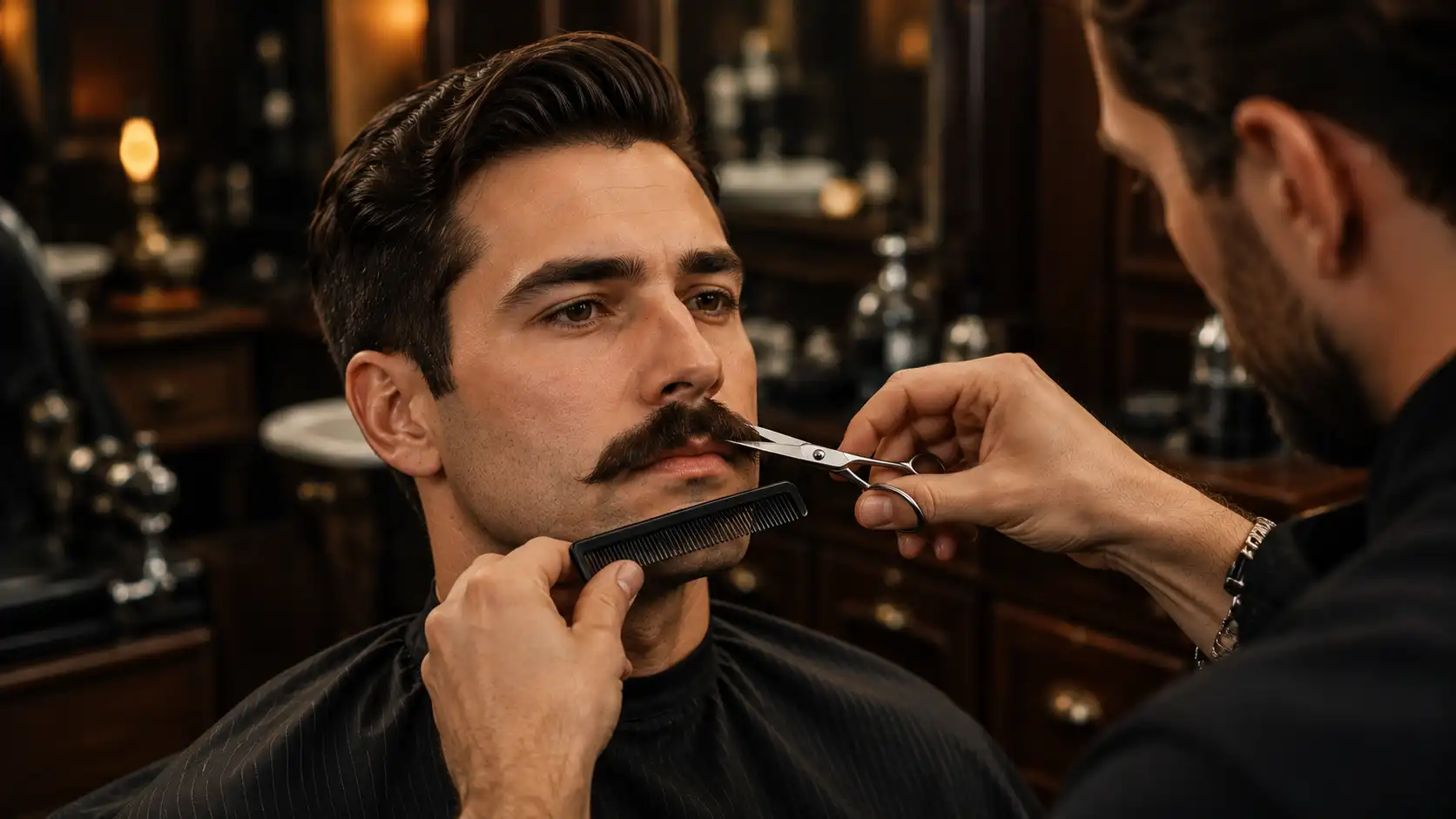
Most men who try trimming a chevron mustache at home end up cutting the sides too high, thinning the centre too much, or shaving off the shape entirely. The result looks nothing like the style they wanted. If you have been searching for how to trim a chevron mustache properly, you are not alone. It is one of the most specific and misunderstood trims in men’s grooming.
A chevron mustache is a thick, full mustache with strong diagonal sides forming an inverted V shape that covers the upper lip and ends at or just past the corners of the mouth. To trim it correctly, you control length first, define the lip line second, and shape the diagonals last. Done in the right order, the chevron stays bold, symmetrical, and clean.
The style is having a serious comeback in 2026. Bold facial hair is trending, and the chevron sits at the intersection of masculine, retro, and modern.
At HQ Barbershop in Dallas, we shape and maintain chevron mustaches regularly as part of our Moustache Trim in Dallas service. Our licensed barbers know exactly how much to take off and where to stop. But if you want to maintain your chevron at home between visits, this guide gives you every step.
In this blog, we’ll cover what the chevron mustache actually is, how to trim a chevron mustache, the tools you need, how to grow it correctly, the exact trimming steps, how to maintain it daily, and the most common mistakes to avoid.
What Is a Chevron Mustache and Why Is It Different

The chevron mustache gets its name from its shape. The Chevron insignia is an inverted V, and that is exactly what this style creates across your upper lip. The sides angle downward from the nose toward the corners of the mouth, forming that classic downward diagonal.
This is not a pencil mustache. It is not a handlebar. The chevron does not curl, wax, or thin. Its power comes from density and clean lines. Freddie Mercury wore one. Tom Selleck made it iconic. And it has stayed relevant for decades because it suits a wide range of face shapes and requires no product to maintain its look.
The difference between a good chevron and a bad one comes down to two things: how much density you preserve at the centre, and how cleanly you define the diagonals at the sides. Too thin and it looks like an overgrown standard mustache. Too wide at the sides and it starts becoming a walrus. The chevron lives in a specific, well-defined zone.
A few things set it apart from similar styles:
- Chevron vs horseshoe: A horseshoe mustache extends downward past the corners of the mouth along the sides of the chin. The chevron stops at the corners. Cleaner, tighter, more controlled.
- Chevron vs walrus: A walrus mustache grows long and droops over the lip. The chevron clears the lip and maintains a defined upper edge just below the nose.
- Chevron vs natural mustache: A natural mustache has no intentional shape. The chevron has strong diagonal lines and a specific silhouette.
If you want a confident, structured, low-maintenance mustache, the chevron is one of the best choices you can make.
How Long Does It Take to Grow a Chevron Mustache
Facial hair grows roughly 0.3 to 0.5 mm per day on average. That works out to about half an inch per month. For a proper chevron, you need at least four to six weeks of uninterrupted growth. Some men with denser hair can start shaping at around four weeks. Others with finer growth need closer to eight weeks before there is enough density to hold the shape.
The most common mistake: shaping too early. If you start trimming at two or three weeks, you cut into growth that has not filled in yet. The result is patchy and uneven, and fixing it usually means starting again.
During the growth phase:
- Do not shape the sides. Let everything grow out.
- Comb the hair straight down each morning to train growth direction.
- Apply a small amount of mustache oil or beard oil to keep the hair soft and encourage healthy growth.
- Avoid touching the diagonal edges until you have enough density to work with.
Patience here makes the trimming stage significantly easier. A fuller base gives you more to work with and a much sharper end result.
How to Trim a Chevron Mustache: Step-by-Step
This is the core of how to trim a chevron mustache properly. Follow each step in order. Skipping steps or reversing the sequence is how mistakes happen.
Step 1: Start With Clean, Dry Hair

Always trim a mustache dry. Wet hair looks longer than it actually is. When it dries, it shortens. If you trim wet, you will almost always cut too much.
Wash and fully dry your mustache before you start. Comb it straight down. Let it settle for a minute. Now you are looking at the real length and the real shape.
Step 2: Set Your Base Length With a Trimmer

Use your beard trimmer on a long guard setting, around 8 to 10 mm to start, and run it through the mustache to set a consistent base length across the whole area. This removes any bulk and creates an even foundation to work from.
Do not try to define the edges or shape the diagonals with the trimmer. That step comes later, and using a guard for edge work removes precision. At this stage, you are only reducing overall length.
Step down one guard if needed. Stop before you get too short. The chevron needs density. Once bulk is removed evenly, put the trimmer down.
Step 3: Comb the Hair Straight Down and Identify the Lip Line

Take your mustache comb and comb all the hair straight down toward the lip. This reveals exactly which hairs are crossing over onto the lip and which are sitting just above it.
The chevron should sit just above the upper lip. It does not need to be completely clear of the lip in a hard line, but hairs that fall into your mouth or cause irritation need to come off.
Using small scissors, trim only the hairs that cross the lip. Work slowly from the centre outward. Follow the natural curve of your mouth. Do not create a ruler-straight horizontal line. That kills the softness the chevron needs at the lip edge.
Step 4: Shape the Diagonal Sides

This is where the chevron becomes a chevron.
Using scissors or the precision trimmer without a guard, trim along these diagonal lines on both sides. The hair should taper downward as it moves toward the corners. The sides end at the corners of the mouth. Do not extend past them, not trim upward at the corners. That creates a different shape entirely.
Keep the corners relatively full. The chevron gets its character from the downward slope. Trimming the corners too high removes the diagonal angle and turns it into a standard rectangle.
Step 5: Clean Under the Nose
The area directly under the nose is where hairs grow downward into the centre of the mustache. For the chevron, this area should look clean and even without being shaved back too aggressively.
Using a precision trimmer or small scissors, clean up any stray hairs just below the nose. Keep the trimming gentle here. The centre of a chevron relies on fullness. If you remove too much under the nose, the style loses its density and starts looking hollow in the middle.
Step 6: Check Symmetry and Make Final Adjustments

Step back from the mirror. Relax your face completely, because a tensed face distorts symmetry.
Check both sides. Look at the diagonal lines. Look at the lip line, at the overall density. Then turn slightly to each side to check the profile.
Make only small adjustments. If the left side looks slightly longer, trim a few hairs. Then stop and check again before cutting more. Chasing perfect symmetry is how you end up over-trimming. Small corrections are enough.
How to Maintain a Chevron Mustache: Weekly and Daily Routine
Growing and trimming the chevron is the start. Keeping it sharp between trims is what makes it look intentional week after week.
Daily Maintenance
Brush your chevron downward every morning with a mustache comb. This trains the hair to grow in the right direction and keeps it from spreading sideways or upward.
Apply a small amount of mustache oil daily. Mustache hair is coarser than scalp hair and dries out quickly. A few drops of mustache oil keeps the hair soft, reduces itchiness at the upper lip, and makes the style easier to manage.
Weekly Maintenance
Once a week, do a light trim to manage any hairs that have crossed the lip line or grown unevenly at the sides.
Comb straight down. Trim only what you need to. The goal of weekly maintenance is not reshaping. It is keeping the shape you already have.
Do not do a full trim every week. Full trims every two to three weeks are enough for most men. Weekly sessions should be minimal, five minutes at most.
When to Book a Professional Trim
Sometimes it is worth letting a barber reset the shape. If you have over-trimmed and need blending, if the diagonals have lost their angle, or if you want to change the style slightly, a professional trim makes the recovery faster and cleaner.
Our Moustache Trim service in Dallas at HQ Barbershop is built for exactly this. Our barbers assess your current shape, identify what needs correcting, and leave you with a clean, precise chevron that is easy to maintain at home.
For men who also want to understand how the mustache works alongside a full beard, know more in our guide how to trim a moustache properly. And if you are managing both a beard and a mustache, our how to trim moustache with beard guide walks you through the blending and proportion steps in detail.
Which Face Shapes Suit the Chevron Mustache
The chevron mustache is more versatile than people expect. It does not suit every face shape equally, but it works across a wider range than most mustache styles.
- Oval face shapes are the most natural match. The inverted V of the chevron adds width and definition across the upper lip without throwing off the natural proportions of an oval face.
- Square face shapes also work well. A square jaw is bold, and the chevron matches that energy. The width of the mustache balances the strong jawline without competing with it.
- Round face shapes can wear a chevron successfully when the style is trimmed to sit just above the lip and not extend too far past the corners. A slightly narrower chevron adds length to the face without exaggerating the roundness.
- Oblong or long face shapes should be careful with the chevron. The style adds horizontal width, which can make a long face look even longer. If you have a noticeably long face, a slightly narrower chevron or a chevron with fuller sides at the corners can help balance things out.
Grow it, shape it once properly, and see how it sits on your face. The chevron is forgiving enough that most men can find a version that works.
Common Mistakes When Trimming a Chevron Mustache
Common Mistakes come up repeatedly when trimming a chevron mustache, even from men with years of grooming experience.
- Trimming the centre too short. The chevron lives and dies on density at the centre. If you thin it too much, the style collapses. Trim length, not thickness.
- Cutting the sides too high. Raising the diagonals turns the chevron into a rectangle. The downward angle is everything. Keep the sides at the corner of the mouth level, not above it.
- Trimming wet hair. Wet hair is longer than dry hair. You will cut more than you intend to. Always trim dry.
- Going too far past the corners. The chevron ends at the corners of the mouth. Extending past them starts to create a different style, closer to a horseshoe. Define where the corners are before you start shaping.
- Chasing perfect symmetry. No face is perfectly symmetrical. Checking and rechecking symmetry obsessively leads to over-trimming on both sides. Check once, adjust minimally, and stop.
- Using too much product. Heavy wax collapses the natural fullness of the chevron. If you use wax at all, use a small amount of light-hold wax only. Sea salt spray on slightly damp hair can add texture and definition without weight.
Chevron Mustache Variations Worth Knowing
The core chevron shape stays consistent, but there are a few variations depending on personal preference and face shape.
- The classic chevron is the standard: thick, full, covering the upper lip, with diagonal sides stopping at the corners of the mouth. This is the Freddie Mercury look.
- The chevron with stubble pairs the mustache with light stubble across the face. The mustache stays as the focal point while the stubble adds structure to the jaw without competing. This is one of the most popular current combinations.
- The chevron with a clean-shaven face puts all attention on the mustache. Bold. Confident. Best for men who can grow dense, thick mustache hair.
- The fuller chevron allows the sides to extend very slightly past the corners and keep more density. This works for men with thicker hair and larger face proportions.
Final Thoughts
The chevron mustache is one of the boldest, most recognisable styles in men’s grooming. Done right, it looks sharp, confident, and intentional. Done wrong, it looks uneven and overgrown. The difference comes down to knowing how to trim a chevron mustache correctly: control the length first, define the lip line second, shape the diagonals last, and preserve density throughout.
Most men get it wrong because they rush or thin the centre. Now you know exactly what to do.
At HQ Barbershop in Dallas, our barbers shape and maintain chevron mustaches as part of our daily work. We are licensed by the Texas Department of Licensing and Regulation (TDLR), and we know how to build the right shape for your face, your hair density, and your lifestyle. Whether you want a professional reset or your first proper chevron shape, we are ready.
Book your Moustache Trim in Dallas at HQ Barbershop and walk out with a chevron that looks exactly how it should.
FAQs: How to Trim a Chevron Mustache
Question: How long does a chevron mustache take to grow?
Answer: Allow four to eight weeks of uninterrupted growth before shaping. Men with denser hair may be ready at four weeks. Finer hair types typically need closer to six to eight weeks to build enough density for the style to hold its shape.
Question: Should a chevron mustache cover the upper lip?
Answer: Yes. The chevron should cover the upper lip without hanging into the mouth. The hair sits just above the lip or lightly touching it. If it causes irritation during eating or talking, a light trim along the lip line is all that is needed.
Question: How often should I trim a chevron mustache?
Answer: Light lip line maintenance every five to seven days keeps it comfortable. A full shape reset every two to three weeks is usually enough to keep the diagonals clean and the centre dense.
Question: What is the difference between a chevron and a walrus mustache?
Answer: A walrus mustache grows long and droops over the lip without a defined shape. A chevron maintains a clean lip line, a clear inverted V shape, and does not extend past the corners of the mouth. The chevron is structured. The walrus is not.
Question: Can a chevron mustache be trimmed with a beard trimmer only?
A trimmer works for managing bulk and overall length, but scissors are better for defining the diagonal edges and cleaning the lip line. Using both tools in the same session gives the cleanest result.