July 20, 2026
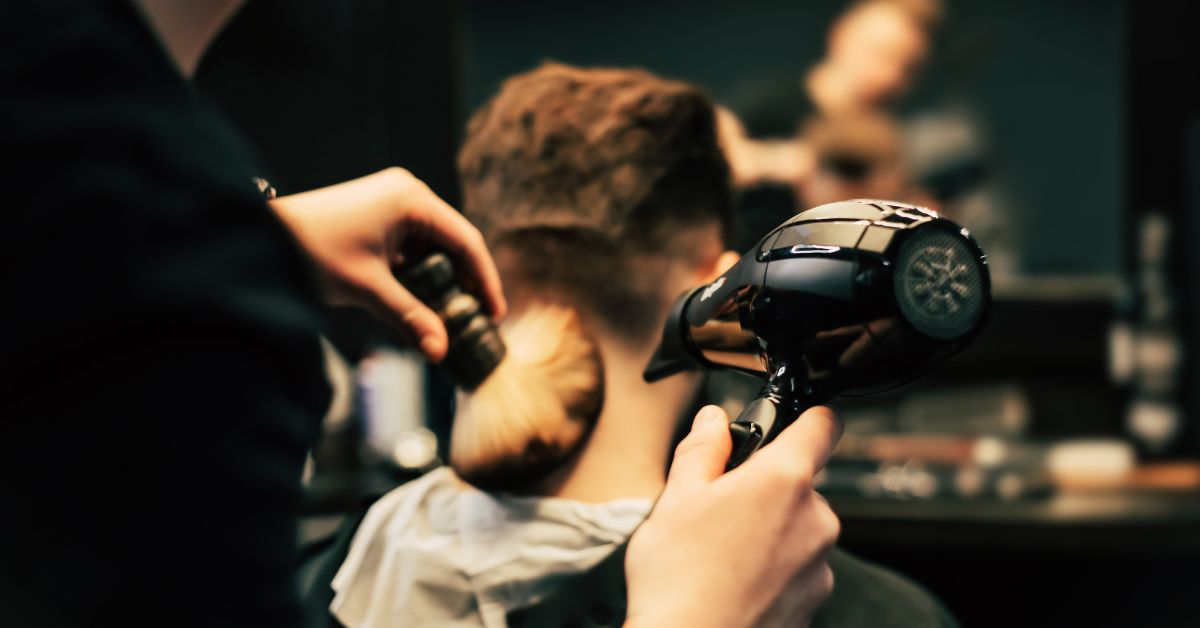
Most men blast their hair dryer on the highest setting and hold it two inches from their scalp. That habit causes more damage than they realise. So how hot does a hair dryer get, and when does that heat start hurting your hair?
Most hair dryers reach between 80°F and 140°F (27°C to 60°C) on low-to-medium settings, and up to 200°F (93°C) on the highest setting. Professional salon dryers can exceed 230°F (110°C) at close range. Hair keratin begins breaking down at 300°F (150°C), but cumulative damage starts well before that threshold.
This matters because men typically dry shorter hair at closer range, concentrating more heat per square inch on the scalp and strands. Most online guides ignore this. They write for women with long hair and completely skip the male-specific risks.
HQ Barbershop Dallas offers a professional hair dryer service in Dallas that uses controlled heat, proper technique, and premium products to style your hair without the damage home drying causes. In this blog, we’ll break down exact temperatures by setting and wattage, explain what heat does to men’s hair, and show you how to blow dry safely at home and when to leave it to a professional.
How Hot Does a Hair Dryer Get on Each Setting?

The answer depends on which setting you use. And most men only ever use one: maximum.
That is a problem. The gap between your dryer’s lowest and highest setting is massive, sometimes over 100°F of difference. Understanding what each range actually does helps you pick the right heat for your hair instead of defaulting to the hottest option every morning.
Low and Cool Settings (80°F to 140°F / 27°C to 60°C)
At the low end, around 80°F, the air coming out feels barely warm. Almost room temperature. Most men dismiss this setting as useless, but it serves a real purpose.
Cool and low heat settings work best for finishing a style. After you have shaped your hair with medium heat, a blast of cool air closes the cuticle (the outer layer of each hair strand), locking the style in place and adding natural shine. This is what barbers mean when they talk about a “cool shot finish.”
For men with fine or thin hair, this range also works for primary drying. Fine hair holds less water and dries quickly, so it does not need high heat. Blasting fine hair at 200°F does nothing except accelerate damage.
Medium and High Settings (140°F to 200°F / 60°C to 93°C)
This is where most home drying happens. And where most damage starts.
At 140°F, the air feels noticeably warm. Hair dries at a reasonable pace without excessive risk. Push past 160°F and you enter the zone where moisture starts leaving the hair shaft faster than it should. At 200°F, the air temperature at the nozzle approaches the boiling point of water.
Here is what most men get wrong. They set the dryer to maximum and hold it close to speed things up. But speed is not worth the trade-off. Every degree above 150°F strips moisture from the hair and forces the cuticle to lift, leaving strands rough, dry, and prone to breakage.
Professional Salon Dryers (Up to 230°F+ / 110°C+)
Salon-grade dryers run hotter than anything you buy at a shop. Some exceed 230°F at close range. So why does your hair look better after a barbershop blow dry instead of worse?
Two reasons. First, professional dryers compensate with much higher airflow speed. They move more air at lower relative heat, which dries hair faster without concentrating heat on one spot. Second, a trained barber controls distance, angle, and movement with precision that no at-home user replicates.
How Hot Does a Hair Dryer Get by Wattage?
Wattage tells you how much power the motor draws. More power generally means more heat and stronger airflow. But the relationship is not as simple as “bigger number equals hotter dryer.”
Temperature by Wattage Table
| Wattage | Max Temperature | Best For | Typical Use |
| 1200W | ~140°F (60°C) | Fine hair, travel, light drying | Compact travel dryers |
| 1500W | ~160°F (71°C) | Normal hair, everyday use | Standard home dryers |
| 1875W | ~180°F (82°C) | Thick hair, faster drying | Mid-range home dryers |
| 2000W+ | ~200°F+ (93°C+) | Very thick/dense hair, professional use | Salon-grade dryers |
Most home dryers sold today sit in the 1500W to 1875W range. That covers the vast majority of men’s hair types. Unless your hair is exceptionally thick or dense, you do not need a 2000W dryer.
Why Higher Wattage Does Not Always Mean Better
A common mistake. Men assume a 2000W dryer dries better because it produces more heat. But airflow speed matters just as much as temperature, sometimes more.
Think about it this way. A 2000W dryer on medium heat with high airflow dries your hair faster and safer than a 1500W dryer cranked to maximum heat with low airflow. The first moves water off the hair surface efficiently. The second just bakes it.
When choosing a dryer, look at airflow specs alongside wattage. A dryer with multiple speed settings and at least three heat options gives you far more control than a cheap model with one speed and two temperatures.
What Temperature Damages Men’s Hair?

Your hair can take heat. But it has limits. And most men blow past those limits every single morning without realising it. Understanding how hot does a hair dryer get before it starts causing real harm is the first step toward protecting your hair.
The 300°F Keratin Breakdown Point
Hair is built from a protein called keratin. It is tough. It is flexible. But at approximately 300°F (150°C), the chemical bonds holding keratin together begin to break apart. Scientists call this process denaturation. Once those bonds break, the damage cannot reverse itself. The damaged section stays damaged until it grows out and gets cut off.
Good news: most hair dryers never reach 300°F. Manufacturers engineer them to stay below that threshold.
Bad news: you do not need to hit 300°F to cause problems. Repeated exposure to temperatures above 150°F (65°C) strips moisture from the hair shaft, forces the cuticle to lift, and weakens the strand from the inside out. Over weeks and months, that cumulative damage adds up to the same result. Dry, brittle hair that snaps, splits, and refuses to hold a style.
Signs Your Hair Dryer Is Too Hot
How do you know if you are overdoing it? Your hair tells you. Pay attention.
Your hair feels rough or straw-like immediately after drying. That is moisture loss. Your scalp tingles, burns, or feels tight during drying. That is direct heat damage to the skin. You notice a faint burning smell while drying. That is your hair telling you to back off, immediately. Split ends increase even though you get regular trims. Heat causes splits faster than cutting removes them. Your style collapses within hours. Damaged cuticles cannot hold shape because the hydrogen bonds that lock a style in place keep breaking down.
If two or more of these sound familiar, your dryer settings need adjusting.
Why Men’s Hair Is More Vulnerable Than You Think
Most men dry shorter hair. Shorter hair means the dryer sits closer to the scalp. Closer range means more concentrated heat per square inch hitting both the hair and the skin underneath.
Women with long hair hold the dryer further away because the length demands it. Men with a 3-inch crop do not have that buffer. The nozzle ends up 2 to 3 inches from the scalp, which can double the effective heat exposure compared to 6 inches.
And here is the thing. Men also tend to skip heat protectant entirely. Women’s grooming routines include it as standard. Most men have never bought a bottle in their lives. That missing barrier means heat hits bare hair with nothing to absorb the impact.
Safe Hair Dryer Temperature for Every Men’s Hair Type

Knowing how hot does a hair dryer get is only useful if you match that knowledge to your specific hair. What works for thick, coarse hair will destroy fine, thin hair. Here is the breakdown.
Fine and Thin Hair
Stay below 140°F (60°C). Fine hair dries in minutes, so it does not need high heat. Use medium airflow on a low heat setting and keep the dryer at least 8 inches from your head. Finish with a cool shot to close the cuticle and set your style.
Most men with fine hair who complain about flatness are actually causing it themselves. High heat strips volume from fine strands and leaves them limp. Lower heat preserves the natural body your hair needs to hold shape.
Thick and Coarse Hair
You can handle 160°F to 180°F (71°C to 82°C), but with one critical rule: keep the dryer moving at all times. Never hold heat on one spot for more than two to three seconds. Thick hair absorbs more water and needs more energy to dry, but concentrated heat creates hot spots that damage individual strands while the rest of your hair is still damp.
Use a nozzle attachment to direct airflow. It focuses the stream and speeds up drying without needing extra heat.
Curly and Coily Hair
Direct, focused heat destroys curl pattern. No exceptions.
Use a diffuser attachment at 140°F to 160°F (60°C to 71°C). The diffuser spreads airflow across a wider area, drying curls evenly without blasting them into frizz. If you do not own a diffuser, air drying is better than direct heat.
Colour-Treated Hair
If you colour your hair, heat becomes your colour’s worst enemy. Keep below 150°F (65°C).
Heat opens the cuticle. Open cuticles release colour molecules. The hotter you dry, the faster your colour fades. Men who spend money on professional hair colouring in Dallas and then blast their hair on max heat every morning are undoing their own investment. We covered this in detail in our guide on does hair colour damage hair.
For professional blow-dry results with controlled heat matched to your hair type, our hair dryer service in Dallas handles the temperature decisions for you.
How to Blow Dry Men’s Hair Without Heat Damage
Technique beats temperature. A man using medium heat with proper technique will get better results than a man using a professional dryer on max with no clue what he is doing. Once you know how hot does a hair dryer get at each setting, the next step is learning how to use that heat properly.
Towel Dry First, Then Blow Dry
Before you touch the dryer, remove 60 to 70 percent of the water with a towel. Pat, do not rub. Rubbing creates friction that roughens the cuticle before heat even enters the picture.
Why does this matter? Less water on the hair means less time under heat. If your hair is dripping wet when you start blow drying, you need twice as much heat exposure to finish. Towel-dried, damp hair reaches the same result in half the time.
Starting with properly washed hair makes a difference here too. If your hair carries product residue or excess oil, the dryer works harder and takes longer. A professional hair washing service in Dallas removes all of that before drying even starts. We covered washing frequency and technique in our guide on how often men should wash their hair, and for men considering alternative cleansing methods, our post on can I wash my hair with conditioner only covers when that approach works and when it does not.
Keep the Right Distance
Hold the dryer 6 to 8 inches from your hair. Not closer.
Cutting that distance in half roughly doubles the heat reaching the hair surface. At 3 inches, a dryer set to 160°F delivers heat equivalent to 200°F+ on the strand. Most men have no idea they are doing this. They hold the dryer as close as possible, thinking it speeds up the process. It does. It also speeds up damage. If you cannot tell the distance, use your hand. Spread your fingers wide and place them between the nozzle and your head. That gap is roughly 6 inches.
Always Keep the Dryer Moving
Never park the dryer on one spot. Three seconds in one position is the maximum before you move.
Think of it like ironing a shirt. You do not hold the iron still on one section. You keep it moving to distribute heat evenly. Same principle applies to your hair. Constant movement prevents hot spots, distributes drying evenly, and reduces the chance of scalp burns.
Use the Cool Shot to Finish
Every decent dryer has a cool shot button. Most men never press it.
After you finish drying and shaping your hair, hit the cool shot for 30 seconds. Cool air closes the cuticle instantly, locking your style in place and adding a natural shine that hot air strips away. This one step takes half a minute and makes your style last hours longer.
It honestly makes that much difference.
Professional Blow Dry vs. At-Home Hair Drying
Knowing how hot does a hair dryer get at home is one thing. Understanding why the same temperature produces dramatically different results in a barbershop is another.
Why Barbers Get Better Results With the Same Heat
Three factors separate a professional blow dry from what you do in your bathroom.
First, the tools. Salon-grade dryers offer 3 to 5 heat settings versus the 2 most home models provide. They generate higher airflow at lower heat, which dries faster without cooking the hair. The nozzle attachments are designed for precision directional control.
Second, the technique. A trained barber controls the angle of airflow relative to the hair shaft. Blowing air downward along the strand smooths the cuticle. Blowing air upward against the strand (which most men do at home) lifts the cuticle and creates frizz. That angle difference alone explains why barbershop blow dries look smoother.
Third, the products. Barbers apply heat protectant before drying and finishing products after. Most men skip both steps entirely.
The Barbershop Blow-Dry Process
At HQ Barbershop, our hair dryer service includes two options. A volume-boosting blow dry that adds texture and fullness using a round brush and directional heat. And a straight blow dry that delivers a sleek, polished finish for men who want a cleaner look.
Both use professional-grade dryers with controlled temperature, proper distance, and constant movement. We match the heat setting to your hair type, not to whatever the dryer defaults to when you turn it on. The barbershop version holds its shape all day. Pair it with a fresh haircut in Dallas and the results last even longer because the cut and the styling work together.
When to Book a Professional Blow Dry
Before a job interview, a wedding, or any event where first impressions matter. After a fresh haircut to see the full shape and hold your barber intended. And after any colour treatment to set the colour without heat damage that home drying risks. Many of our clients in Oak Lawn and Uptown Dallas add a blow dry to their regular haircut appointment. It takes minutes and completely changes how the cut looks when they leave the chair.
Hair Dryer Heat and Styling Products: What Men Need to Know
Heat does not just affect bare hair. It reacts with whatever product sits on the strand. And for men who style daily, this interaction matters more than most realise. Knowing how hot does a hair dryer get only tells half the story if you ignore what is already on your hair when you turn the dryer on.
Blow Drying Over Pomade and Wax
The heat melts the wax-based product into the hair shaft, where it hardens into a stiff, sticky coating instead of a flexible hold.
The fix is simple. Blow dry first, then apply the product. Dry, shaped hair accepts styling products the way they are designed to work, on the surface, not baked into the strand. If you use clay or matte paste, the same rule applies. Heat first, product second.
When to Use Heat Protectant Spray
Heat protectant spray creates a thin barrier on the hair shaft that absorbs and distributes heat before it reaches the cuticle. It reduces effective heat transfer by roughly 50 percent, depending on the product.
Apply it to damp hair before blow drying. One even spritz across the top and sides is enough for short-to-medium men’s styles. Work it through with your fingers. Do not oversaturate.
Men skip this step more than any other grooming habit. If you use a hair dryer three or more times a week, heat protectant is not optional. It is the difference between hair that stays healthy for months and hair that turns brittle within weeks.
Frequently Asked Questions
How hot does a hair dryer get on the highest setting?
Most home hair dryers reach 180°F to 200°F (82°C to 93°C) on the highest setting. Professional salon dryers can exceed 230°F (110°C) at close range. The exact temperature depends on the wattage, motor design, and distance from the nozzle.
Can a hair dryer damage your hair permanently?
Yes, if used improperly over time. Keratin proteins begin breaking down at 300°F (150°C), but cumulative exposure above 150°F causes dryness, breakage, and split ends that persist until the damaged hair grows out and gets trimmed.
What is the safest hair dryer temperature for men?
For most men, 140°F to 160°F (60°C to 71°C) with medium-to-high airflow provides effective drying without significant damage risk. Men with fine hair should stay below 140°F. Men with thick or coarse hair can push to 180°F with constant movement.
Does blow drying cause hair loss in men?
Blow drying does not cause hair loss from the follicle. But excessive heat causes breakage, which makes hair appear thinner and less dense. Proper technique, safe temperature, and heat protectant spray prevent this entirely.
How far should you hold a hair dryer from your hair?
At least 6 to 8 inches. Halving the distance roughly doubles the heat reaching the hair surface. Most men hold the dryer far too close, concentrating heat on the scalp and strands in ways that accelerate damage significantly.
Get the Right Blow Dry for Your Hair at HQ Barbershop
How hot does a hair dryer get depends on the setting, the wattage, and how close you hold it. But the real question is whether you are using the right heat for your hair type with the right technique. Most men are not.
HQ Barbershop offers a professional hair dryer service in Dallas with controlled heat, trained technique, and premium products matched to your hair type. Our barbers deliver volume-boosting and straight blow-dry finishes that hold shape all day without the damage home drying causes. Walk-ins welcome, or book your appointment for guaranteed availability. Also visit us through our Google Business Profile and let us create a style that suits you from every angle.
Stop guessing the temperature. Start getting it right.