August 22, 2026
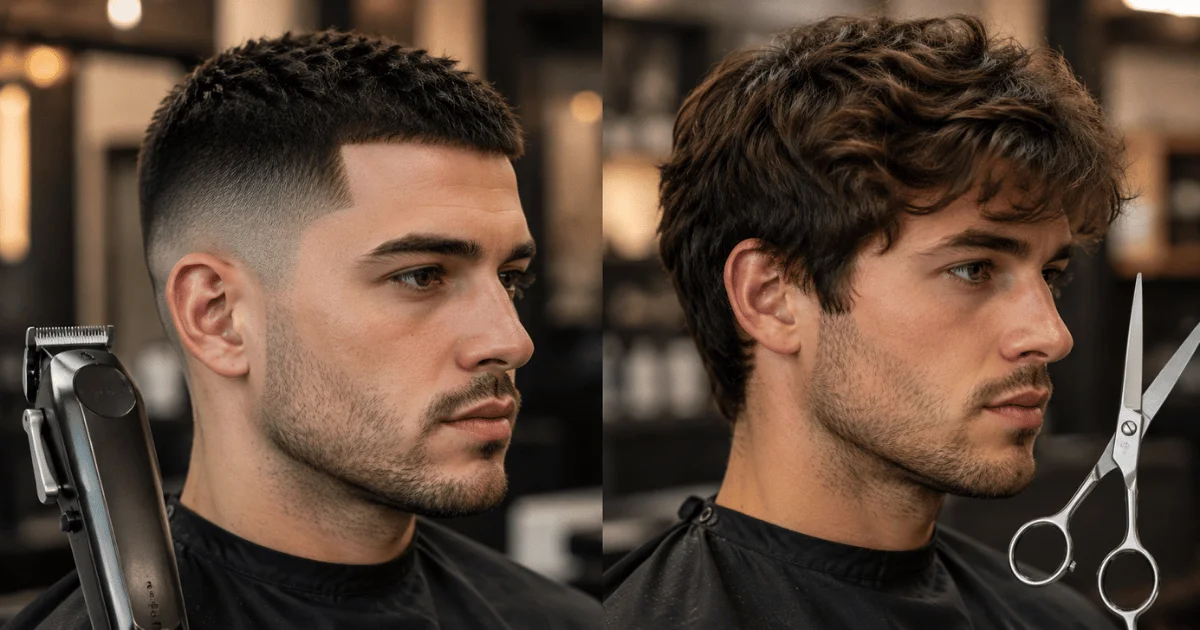
The scissor cut vs clippers question comes up in our chairs almost every day. Here’s the short answer: scissors shape longer hair with texture and natural movement, while clippers cut shorter and sharper using numbered guards. Most great haircuts actually use both.
At HQ Barbershop in Oak Lawn, Dallas, our barbers switch between shears and clippers dozens of times a day. So we put this guide together to explain the real difference and help you know exactly what to ask for in the chair.
Below we break down how each tool works, which one suits your hair, and why the best cut often mixes the two.
What is a scissor cut?

A scissor cut, also called a shear cut, is a haircut your barber shapes by hand using professional scissors. Instead of a fixed guard length, the barber controls every snip.
That control is the whole point. Scissors let us layer, texture, and blend, so the hair keeps its natural flow and movement. Techniques like scissor-over-comb let us leave length on top while still tidying the sides.
Because the work is done section by section, a scissor cut suits medium to long hair best. It grows out softly, without the hard line clippers can leave.
What is a clipper cut?

A clipper cut uses electric clippers with numbered guards to cut hair to an even length. Snap on a shorter guard, take more off. Snap on a longer one, keep more hair.
Clippers are fast and consistent. They’re the tool behind buzz cuts, crew cuts, tapers, and every kind of fade. If you want the full breakdown, read our guide on what a clipper cut is and the types of clipper cuts we cut most. Clippers also handle thick, coarse, and curly hair well, since they cut bulk quickly and leave a clean outline.
Scissor cut vs clippers: the key differences
Both tools cut hair, but they work in different ways and give different results. Here’s how they stack up side by side.
| Factor | Scissor cut | Clipper cut |
| Best hair length | Medium to long | Short |
| Finish | Soft, textured, natural | Sharp, clean, uniform |
| Speed | Slower, 30 to 60 mins | Faster, 15 to 25 mins |
| Grow-out | Softer, less noticeable | Sharper lines, grows out faster |
| Maintenance | Every 4 to 6 weeks | Every 1 to 3 weeks |
| Styling flexibility | High, layered looks | Lower, short structured looks |
So the pattern is clear. Scissors win on length and texture, while clippers win on speed and sharp, short structure. Neither is better overall. The right tool depends on the look you want.
Which one lasts longer and costs more?
Grow-out is where people feel the difference first. A scissor cut fades out softly, so it can look decent for four to six weeks. A clipper cut, especially a tight fade, sharpens fast but loses its edge within one to three weeks.
Price usually follows time. Scissor work takes longer and needs more skill, so it often costs a little more than a quick clipper cut. That said, a detailed skin fade takes real precision too, so the gap is smaller than people think.
At HQ Barbershop, a men’s haircut and a skin fade both run $50, so you can pick the technique that fits your hair rather than your budget.
Which suits your hair type and face shape?
Your hair does a lot of the deciding here. If your hair is straight, thick, or coarse, both tools work well, though clippers control bulk faster. Curly or wavy hair often looks cleaner with a clipper outline on the sides. For fine hair, scissors add movement so the cut does not look flat.
Face shape matters too. A clipper fade adds sharp definition, which flatters rounder faces. Scissor work softens the edges on square or angular faces, so the look feels more balanced.
Not sure which is right for you? Our barbers read your hair and face during the consultation, then pick the tool to match. Bring a photo and we’ll tell you straight what will work.
Can you combine scissors and clippers?
Yes, and most of our best cuts do exactly that. The classic combination is clippers on the sides and back for a clean fade or taper, then scissors on top for length, texture, and flow. This gives you sharp structure where you want it and natural movement where it counts.
For example, a textured crop or a modern quiff usually starts with a clipper fade, then finishes with scissor work up top. So the scissor cut vs clippers debate often ends with a simple answer: both, in the right hands.
Scissor cut vs clippers: which should you choose?
Pick clippers if you want a short, sharp, low-maintenance look and don’t mind more frequent touch-ups. Buzz cuts, fades, and crew cuts all live here. Our fade haircut guide covers those in detail. Pick scissors if you keep your hair longer, like layers and texture, or want a cut that grows out gracefully.
In short, match the tool to your hair, your routine, and how often you want to sit in the chair. When you’re unsure, a good barber will guide you, and often reach for both.
Frequently asked questions
Q1. Is a scissor cut better than a clipper cut?
Answer: Neither is better on its own. A scissor cut suits longer, textured styles, while a clipper cut suits short, sharp ones. The best choice depends on your hair length, your face shape, and how much daily styling you want to do.
Q2. Do clipper cuts damage your hair?
Answer: No, clippers do not damage healthy hair. They cut cleanly at the surface, just like scissors. Poor blending can leave harsh lines, though, so the result comes down to the skill of your barber, not the tool.
Q3. Why does a scissor cut cost more?
Answer: Scissor work usually takes longer and needs more hand skill, so many shops price it higher. Still, a detailed clipper fade takes real precision too. At HQ Barbershop, our men’s haircut and skin fade are the same $50.
Q4. Can I ask for both scissors and clippers?
Answer: Yes, and you often should. Clippers on the sides with scissors on top is one of the most popular ways we cut, since it blends sharp edges with natural length on top.
Q5. How often should I get each cut?
Answer: A clipper cut needs a touch-up every one to three weeks, depending on length. A scissor cut holds its shape longer, closer to four to six weeks between visits.
Book your cut in Dallas
The scissor cut vs clippers choice really comes down to the look you’re after, and a barber who knows when to reach for each. Get that right, and you leave with a cut that suits your hair, not just your schedule.
That’s what our barbers do every day at HQ Barbershop on Oak Lawn Avenue. Tell us the look you want, or bring a photo, and we’ll pick the right technique.
Book your men’s haircut in Dallas and let our barbers handle the rest.