August 6, 2026
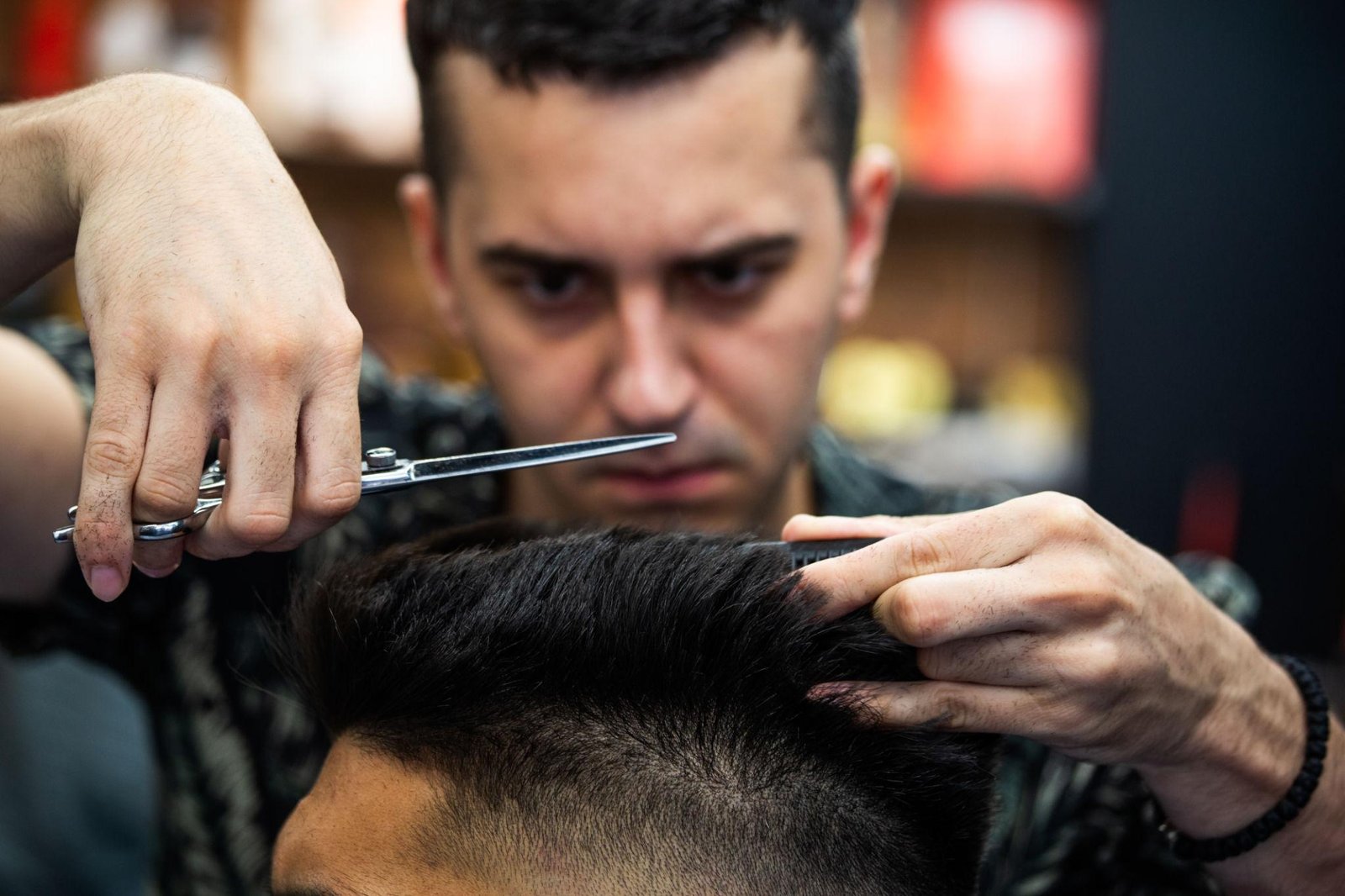
One small misunderstanding at the barber can leave you with a haircut that feels too short, too flat or harder to style than expected. Knowing the difference between clipper and scissor cut helps you explain the finish you want before the first section of hair comes off.
A clipper cut uses electric clippers and guards to create controlled short lengths, clean fades and defined outlines. A scissor cut gives a barber more control over length, texture, shape and movement. Many modern men’s haircuts combine both tools to create short sides and a carefully shaped top.
The same stated length can look different depending on the cutting technique, hair texture and shape created around the head.
HQ Barbershop helps us select the right method based on our hair type, face shape and daily routine through our professional Men’s Haircut service.
What Is the Difference Between Clipper and Scissor Cut?
The difference between clipper and scissor cut comes down to length, finish, texture and shape. Clippers create short, consistent lengths and sharp blends, making them suitable for fades, buzz cuts and clean edges. Scissors preserve more length and give a barber greater control over layering, movement and softer transitions.
A clipper guard does not create the same result as cutting hair to a similar length with scissors.
Clippers work close to the scalp and often follow the contours of the head. Scissors allow us to lift sections away from the scalp, alter the cutting angle and leave selected areas longer.
Main Differences at a Glance
- Length: Clippers usually create very short to short lengths. Scissors can shape short, medium and longer hair.
- Finish: Clippers often create a cleaner and more defined outline. Scissors usually produce softer transitions and more natural movement.
- Texture: Guards tend to leave hair at a more uniform length. Scissors allow layering, point cutting and selective weight removal.
- Precision: Clippers control short lengths through guards and lever adjustments. Scissors control longer sections through elevation, sectioning and cutting angles.
- Grow-out: Close clipper edges often reveal regrowth sooner. Scissor-created transitions may remain softer as the hair gets longer.
- Maintenance: A clipper cut may need little morning styling but earlier edge clean-ups. A longer scissor cut may require product or blow-drying but tolerate more growth.
What Is a Clipper Cut?
A clipper cut uses electric clippers to reduce and shape hair, usually around the sides, back, neckline and sideburns. Guards control the amount of hair left behind, while an adjustable lever helps a barber blend between close lengths.
Our professional Clipper Cut suits men who want fades, short tapers, buzz cuts or a clean style with limited daily maintenance.
How Clipper Guards Control Hair Length
Each guard keeps the blade a fixed distance from the scalp.
Lower guard numbers leave less hair, while higher guards preserve more length. A barber normally combines several settings when creating a fade rather than using one guard across the entire head.
Picture a mid fade on thick hair. A short setting creates the base near the ear, another setting softens the next section and longer guards connect the sides to the top.
One guard leaves a step. Several lengths create a blend.
What Finish Does a Clipper Cut Create?
Clippers can create:
- Close, controlled lengths
- Clean fades and tapers
- Defined sideburns
- Sharp neckline work
- Uniform short sections
- Reduced weight around the sides
The tool does not create the finish by itself. Blade angle, pressure, lever control and the barber’s blending technique all affect the result.
Which Haircuts Commonly Use Clippers?
Popular clipper-led styles include:
- Buzz cut: Keeps most of the hair short and even.
- Fade: Blends several lengths from short to long.
- Skin fade: Begins with bare or nearly bare skin at the base.
- High and tight: Combines very short sides with a narrow top section.
- Short taper: Reduces length gradually near the neckline and sideburns.
- Flat top: Uses clippers and comb control to create an upright shape.
- Short back and sides: Keeps the perimeter neat while preserving top length.
Some of these styles still need scissors through the top or upper blend.
What Is a Scissor Cut?
A scissor cut uses barbering shears to control length, shape, weight and texture. The barber lifts sections away from the scalp and chooses the cutting angle according to the intended hairstyle.
A scissor haircut does not always mean long hair.
Scissors can shape a short crop, refine a crew cut or control the transition above a taper. The method works well whenever the haircut requires different lengths or movement through the top.
How Scissors Create Shape
Scissors allow us to control how one section connects to another.
We can preserve weight in areas that need volume, remove bulk from heavy sections or create a rounded, square or flowing silhouette. That control becomes useful when one uniform guard length would make the haircut appear flat or bulky.
Texture and Movement
Scissor techniques can create separation and movement.
Point cutting softens a blunt edge. Layering removes internal weight while preserving the outside length. Careful sectioning helps the hair fall in its natural direction.
Scissors can also create structured lines when the hairstyle calls for a stronger finish.
Which Haircuts Commonly Use Scissors?
Scissors often shape:
- Side-part haircuts
- Layered men’s haircuts
- Longer crew cuts
- Textured crops
- Medium-length hairstyles
- Curly haircuts
- Swept-back styles
Many of these cuts still use clippers or a trimmer around the neckline and sideburns.
Clipper Cut vs Scissor Cut Comparison Chart
| Feature | Clipper Cut | Scissor Cut |
| Typical length | Very short to short | Short to long |
| Finish | Clean and defined | Softer and more natural |
| Texture | More uniform | Greater texture control |
| Shape | Often follows head contours | More shape-building flexibility |
| Best for | Fades, buzz cuts and short sides | Layers, movement and longer tops |
| Speed | Often quicker for simple cuts | Usually more detailed |
| Grow-out | Short edges may show growth sooner | Transitions may remain softer |
| Daily styling | Usually low | Depends on top length |
| Combination use | Often paired with scissors | Often paired with clippers |
Which Method Gives More Precision?
Both methods create precision, but they solve different problems.Clippers excel at short measured lengths, sharp blending and clean outlines. Scissors provide detailed control over longer sections, weight and movement.
For a skin fade, clipper precision matters near the base. For a textured top, scissor precision matters through the shape.
Which Cut Works Best for Different Hair Types?
The difference between clipper and scissor cut becomes more noticeable when hair texture and density enter the decision.
Straight Hair
Straight hair reveals clipper lines and scissor texture clearly.Clippers can create crisp tapers and short sides, while scissors add volume, separation and controlled movement through the top. Explore our guide to Men’s Haircuts With Straight Hair for related style ideas.
Wavy Hair
Scissors help preserve natural waves and shape the top without removing too much movement. Clippers reduce weight around the sides and neckline. Many wavy hairstyles use both. Our Men’s Haircut Short Wavy guide covers more options for shorter wavy styles.
Curly Hair
Scissors often help preserve curl shape and control volume through longer areas. Clippers can still create a taper or fade around the temples, ears and neckline. The key is avoiding unnecessary length removal through the main curl pattern.
Thick and Coarse Hair
Clippers remove bulk efficiently around the sides and back. Scissors allow a barber to remove weight selectively through the top. Using both often produces a cleaner shape than cutting every section to one length.
Fine or Thinning Hair
Short clipper styles may create an even, tidy appearance with little styling. A carefully planned scissor cut can preserve useful volume by leaving more length where the hair appears fuller. The right choice depends on density, growth direction and the preferred finish.
Which Haircuts Use Clippers?
Clippers work best when a haircut needs short lengths, clean outlines or a gradual fade.
Buzz Cut
A barber may use one main guard for an even finish or several close settings to create slightly shorter sides. The style looks simple, but head shape and hair density still affect the final result.
Fade and Skin Fade
A fade combines several clipper lengths to create a gradient.
Low fades keep the transition near the ears. Mid fades begin higher, while high fades create stronger contrast. A skin fade takes the shortest section down to bare or nearly bare skin. Scissors may still refine the upper transition.
High and Tight
The high and tight combines very short sides with a small section of longer hair on top. Clippers create the strong contrast, while scissors may shape the top if the client wants more movement.
Short Taper
A taper gradually shortens the hair around the neckline and sideburns without taking the entire side extremely short. This can create a clean business finish with less exposed scalp than a high fade.
Flat Top
A flat top relies on strong clipper and comb control. The barber removes small amounts while checking the silhouette from several angles. The top must remain level and structured.
Which Haircuts Use Scissors?
Scissors suit styles where length, texture and movement matter.
Textured Crop
Scissors create separation through the top and fringe. Point cutting can soften a blunt surface and help matte styling products create definition.
Side Part
A side part needs enough length for controlled direction. Scissors preserve useful weight while reducing bulk around the crown and heavier side sections.
Layered and Medium-Length Haircuts
Layering removes weight without sacrificing the overall length.
Medium styles depend on flow and natural direction, so scissors help control the outline around the ears, crown and neckline.
Curly Scissor Cut
Scissors shape selected curl sections and manage volume without flattening the entire pattern.
A taper may still clean the perimeter.
Longer Crew Cut
Scissors can shape the top from shorter near the crown to longer near the front. Clippers usually finish the sides and neckline.
Why Many Men’s Haircuts Use Both Clippers and Scissors
Most modern men’s cuts are hybrid haircuts. Clippers establish short sides, fades and tapers. Scissors preserve top length, create texture and control movement. Our professional Men’s Haircut may use either tool or combine both according to the desired result.
Clipper-Over-Comb
The barber lifts hair with a comb and trims the exposed section with clippers.
This technique helps control bulky areas and blend lengths without depending only on fixed guards.
Scissor-Over-Comb
Scissor-over-comb creates softer blending and detailed shape control. It works well on classic tapers and sections where a hard clipper line would look too strong.
Blending the Transition
The connection between short sides and a longer top determines whether the haircut looks balanced. A barber may use guards, clipper-over-comb, scissor-over-comb and freehand scissor work to remove a visible weight line.
The client sees the shape. The barber sees the transitions.
Which Cut Grows Out Better?
Haircut shape matters more than the tool alone.
How Clipper Cuts Grow Out
Very short sides reveal new growth quickly. Skin fades and sharp outlines gradually lose contrast as the lowest sections become longer. The haircut may still look tidy, but it changes more visibly.
How Scissor Cuts Grow Out
Longer scissor cuts often change more gradually because the transitions start softer.
A layered side part or medium style may tolerate several weeks of growth, although the fringe, crown and outside shape eventually need attention.
Why Shape Matters
A balanced clipper cut can grow out better than a poorly layered scissor cut.
Starting length, fade height, density and the quality of the original shape matter more than simply asking which tool lasts longer.
Which Cut Is Easier to Maintain?
The difference between clipper and scissor cut affects daily styling and appointment frequency in different ways.
Daily Styling
Buzz cuts and very short clipper styles usually require little effort. Longer scissor cuts may need brushing, blow-drying or styling product to maintain the intended shape.
Barber Visit Frequency
Sharp fades may need earlier clean-ups because the shortest areas show growth quickly.
Longer cuts may tolerate more time between visits, although the outline and layers can still lose balance.
Hair Product Use
Short clipper styles may need no product or only a light matte cream.
Scissor-led styles may benefit from:
- Styling cream for light control
- Matte clay for texture
- Pomade for side parts
- Sea salt spray for movement
Use only enough to support the haircut.
Growing Into a New Style
Scissor-led cuts preserve more length, which may make growing towards a medium style easier.
A buzz cut or skin fade requires more time before enough length develops for a swept-back or layered hairstyle. For practical upkeep advice, read How to Maintain a Clipper Cut.
How to Choose Between a Clipper and Scissor Cut
Choose a clipper cut when you want:
- Very short sides
- A fade or buzz cut
- Strong definition
- Minimal morning styling
- A close neckline and sideburn finish
scissor cut when you want:
- More length
- Softer texture
- Natural movement
- Layers
- Greater styling flexibility
Choose both when you want:
- Short sides and a longer top
- A taper with texture
- A modern crop
- A side part
- A blended business haircut
- A fade with controlled top length
Bring a Reference Photo
A photograph explains shape and proportion better than asking only for “a number two” or “a scissor cut”.
We can then adapt the reference to your hair texture, head shape and natural growth pattern.
What Should You Ask Your Barber?
Explain the result you want instead of prescribing the tools.
Discuss:
- How much scalp you want visible
- How much top length you want to keep
- How long you spend styling each morning
- How you want the haircut to look after several weeks
- Cowlicks or difficult crown growth
- Problems with previous haircuts
Let the barber choose the cutting method that creates the requested finish.
Clipper and Scissor Haircuts at HQ Barbershop
At HQ Barbershop, we assess hair texture, density, face shape, growth direction and styling habits before choosing the technique.
We use precision clipper work for controlled lengths, fades and outlines. Scissor techniques help us preserve length, reduce weight and create movement.
Many appointments combine both.
Frequently Asked Questions About the Difference Between Clipper and Scissor Cut
Is a Clipper Cut Better Than a Scissor Cut?
No. Clippers suit short, defined styles, while scissors preserve length and create texture. The better option depends on your hair type, desired finish and maintenance routine.
Do Scissor Cuts Grow Out Better?
They may create softer transitions, but grow-out depends on the original shape, starting length and hair type. A well-designed clipper cut can remain tidy as it grows.
Are Clippers Better for Thick Hair?
Clippers remove bulk quickly around the sides and back. Scissors may still be needed through the top to reduce weight selectively and create movement.
Can a Barber Use Clippers and Scissors Together?
Yes. Many modern haircuts use clippers for the sides and scissors through the top. Combining both creates controlled contrast and a balanced transition.
Which Is Better for a Fade, Clippers or Scissors?
Clippers usually create the fade. Scissors or scissor-over-comb may refine the upper blend where the short sides connect to longer hair.
Choose the Cutting Method That Matches Your Hair and Style
The difference between clipper and scissor cut comes down to length, finish, texture and control. Clippers suit close, clean and highly defined styles, while scissors preserve length and create softer shape and movement. Many men achieve the best result through a combination of both.
HQ Barbershop helps us match every haircut to the client’s hair, lifestyle and preferred finish. Book our Clipper Cut for a sharp short style, or choose our Men’s Haircut for a tailored clipper, scissor or hybrid haircut. You can also get directions to our Dallas barbershop and visit us in Oak Lawn for a haircut shaped around your style.