May 28, 2026
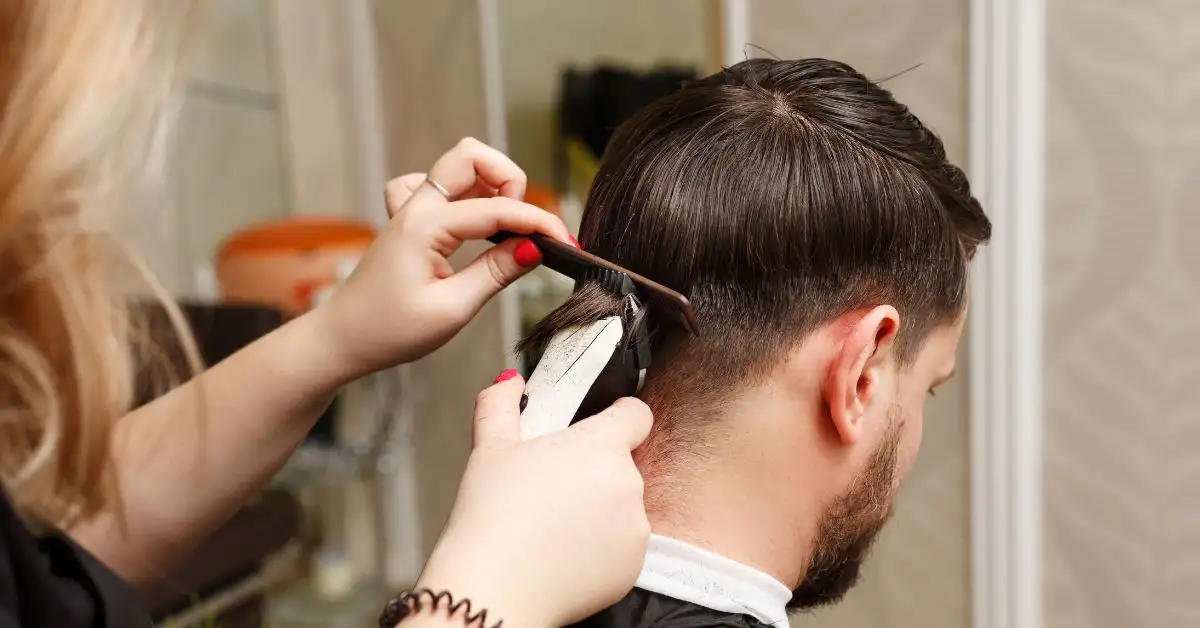
Most men have sat in a barber’s chair and walked out with something completely different from what they pictured. Not because the barber was bad. Because the conversation never happened the right way.
How to ask for a haircut mens is one of the most searched grooming questions on Google. And the answer is not complicated. It just needs to be broken down clearly, so you walk in with confidence and walk out looking sharp. That confusion often leads to frustration, awkward consultations, and haircuts that do not match expectations.
- Learn basic fade and taper terminology
- Bring a realistic reference photo
- Know your preferred hair length
- Mention your daily styling routine
- Ask your barber questions before the cut starts
According to grooming industry surveys, fade haircuts, textured crops, and taper styles remain among the most requested men’s hairstyles in barbershops across cities like Dallas, New York, and Los Angeles. A good haircut consultation is about more than naming a hairstyle. Your face shape, hair density, beard style, maintenance routine, and styling products like pomade or matte clay all influence what haircut will actually work for you.
At HQ Barbershop in Dallas, helps clients every day by simplifying barber terminology and guiding them toward styles that match their lifestyle, grooming habits, and personal appearance goals. In this article, we’ll explain exactly how to ask for a haircut, what haircut should a man get, what to tell your barber, common mistakes to avoid, fade terminology, haircut examples, and professional barber tips that help you leave the chair with confidence.
Why Most Men Struggle to Communicate with Their Barber
Think about the last time you sat in the chair. Did you say “just a trim” and hope for the best? Did you show a photo but still feel like something was off? You are not alone.
The problem is not a lack of style knowledge. Most men have a general idea of what they want. The problem is translating that mental image into words a barber can work with.
Barbers are skilled professionals, not mind readers. A vague instruction like “clean it up” can mean ten different things to ten different people. One client means take off half an inch. Another means to shave the sides completely. Both say the same words.
The solution is simple: learn the basic vocabulary, bring a reference, and ask the right questions. That is it.
Step 1 – Know the Basic Haircut Terms Before You Sit Down
You do not need to memorize a textbook. But knowing a handful of key terms makes the entire conversation faster and cleaner.
Fade vs. Taper: What Is the Difference?
This is the one question that trips up most men. Both styles involve shorter hair on the sides that gradually blends upward. The difference is in how dramatic that transition is.
A taper is subtle. The hair gets slightly shorter as it moves down toward the neckline and temples, but it keeps some length throughout. It is a classic, conservative look that suits most face shapes and professional environments.
A fade is more dramatic. The hair at the temples and neckline is cut very short, often down to the skin, and transitions sharply into longer hair on top. Fades come in three main levels. A low fade starts just above the ear. Mid fade begins around the midpoint of the side of the head. A high fade starts near the temples and creates maximum contrast.
What “Length” Actually Means at the Barbershop
Barbers work in clipper guard numbers. Guard 0 is basically bare skin, 1 is around 3mm, and 2 is 6mm. Guard 8 is the longest at 25mm.
If you walk in and say “I want a 2 on the sides and a 4 on top,” your barber knows exactly what to do. No ambiguity.
The simplest thing you can do before your first visit is google clipper guard lengths and decide which number suits the look you want. It takes five minutes and saves a lot of confusion in the chair.
Scissor Cut vs. Clipper Cut
Clippers cut fast and create clean, uniform lines. Scissors allow for more texture, layering, and natural movement. Most modern men’s cuts use both. If you want a softer, more textured result, tell your barber you want scissor work on top. If you want a tight, defined cut, clippers give that clean finish.
Step 2 – How to Ask for a Haircut Mens Communication Blueprint
Here is the exact structure to follow every time you sit in the chair. Use this as your mental checklist.
Lead with the Overall Style Goal
Start with the big picture before getting into details. Something like: “I want a clean, professional look” or “I want something textured and relaxed” tells your barber the direction before anything else. This one sentence sets the entire tone of the cut.
Specify the Sides
Say exactly what you want on the sides. Use the fade or taper language from above. “Low fade on the sides” or “skin fade with a medium taper” gives the barber something concrete. If you are not sure of the guard number, that is fine. Ask the barber what they recommend for the look you described. They will tell you.
Specify the Top
How much length do you want to keep? Do you want texture and movement, or something sleek and flat? “Leave two inches on top with some texture” is a complete instruction. “Keep the top long but manageable” is vague. Aim for specific.
Talk About the Neckline
The neckline matters more than most men realize. A straight neckline looks clean and sharp. A tapered neckline blends the hair gradually into the neck. A rounded neckline follows the natural curve of your head. Tell your barber which you prefer. If you do not say anything, they will choose for you.
Mention Your Lifestyle
This is the step most men skip. And it is one of the most useful pieces of information a barber gets.
Do you style your hair every morning? want something low maintenance? Do you work in a formal office or a creative environment? A barber who knows you shower and go without touching your hair will recommend a very different cut than one who knows you spend 15 minutes styling every day.
Step 3 – How to Use a Reference Photo the Right Way
Bringing a photo is the single most effective thing you can do. It removes almost all ambiguity from the conversation. But a photo only works if you use it correctly. Here is where men go wrong.
Choose a Photo That Matches Your Hair Type
If you have thick, coarse hair and bring a photo of someone with fine, straight hair, the cut will never look exactly the same. Hair texture, density, and natural growth patterns all affect the final result. Find reference photos featuring men whose hair looks similar to yours. The style will translate much more accurately.
Show Multiple Angles If Possible
A front-facing photo only shows part of the picture. The side and back profile matter too, especially for fades and tapers. If you can find a reference that shows multiple angles, your barber has a much clearer target.
Be Clear About What You Like in the Photo
Do not just hand over the phone and expect your barber to extract the relevant details. Point to the specific elements you want. “I like the high fade on the sides here” or “I want the top to look like this but a bit shorter.” Specific. Directed. Clear.
Step 4 – Match Your Haircut to Your Face Shape
Knowing your face shape takes two minutes and makes a real difference in how your haircut turns out. A style that looks incredible on one face can look completely wrong on another.
Oval Face Shape
Oval faces are the most versatile. Almost any haircut works well. Fades, pompadours, textured crops, side parts – all of them suit an oval face. If you have an oval face, you have the widest range of options available to you.
Square Face Shape
A strong jawline benefits from cuts that add height on top without too much width on the sides. A high fade with volume on top creates an elongating effect that balances the jaw. Avoid styles that add bulk to the sides.
Round Face Shape
Round faces benefit from cuts that create the impression of length. A high fade with a longer top, especially styles with volume or height, works well here. Styles that add width on the sides or sit flat on top tend to emphasize the roundness.
Oblong or Rectangular Face Shape
Longer faces need width, not height. A medium fade with a textured top that sits wider rather than taller works best. Avoid extremely high fades or pompadours that add vertical height.
Step 5 – Exact Phrases to Use When Asking for Popular Men’s Haircuts
Here are the ready-to-use phrases for the most requested cuts at HQ Barbershop. Take any of these into the chair and you will be understood immediately.
For a Clean Fade: I want a mid fade on the sides, blended clean, with the top left at around two to three inches. Textured on top with some volume.
Classic Taper Cut: I want a taper on the sides, nothing too short, with the top kept natural. Scissor work on the top to thin it out a bit and add some texture.
Skin Fade: Skin fade starting at the temples, blended up through a 1 and a 2. Top left long enough to style back or to the side.
Crew Cut: Classic crew cut with a high fade. Slightly longer on top, enough to comb forward. Keep the neckline straight and clean.
Textured Crop: Short on the sides, mid fade, and a crop on top with choppy texture. Not too flat, I want some movement in the front.
Professional Cut: Something clean and office-appropriate. Low taper on the sides, enough length on top to part to one side. Classic straight neckline.
These phrases are not magic scripts. They are starting points. Your barber will follow up with questions based on your specific hair. That back-and-forth is the whole point.
What to Do When the Haircut Is Not Going the Way You Want
Speak up early. Not after the cut is finished.
If the barber is taking more length than you expected, say something in the moment. “Actually, can we leave a bit more on top?” is a completely normal request. Barbers expect it. They would much rather adjust during the cut than have you leave unhappy.
The worst thing you can do is stay silent, then walk out dissatisfied. That helps nobody. At HQ Barbershop, we genuinely want you to get the result you came in for. A one-minute check-in mid-cut fixes almost everything. We take time to consult, personalize each cut, and guide you on styling and maintenance that fits your lifestyle. If you are ready to update your look, explore our Men’s Haircut Services, Hair Styling Consultation, or Beard Trim and Grooming options and book your visit today.
How Often Should Men Get a Haircut?
For most men, every three to four weeks keeps the cut looking fresh and maintained. If you carry a tight fade or a skin fade, you may need to come in every two to three weeks to keep the lines sharp. Fades grow out faster than tapers, which is worth knowing before you commit to the style.
A textured crop or a longer style can go four to five weeks between visits without looking unkempt, as long as you maintain it at home.
Why Your Barber Matters as Much as the Style
You can have the perfect reference photo, know every fade level by number, and still walk out disappointed if you are sitting in the wrong chair.
A skilled, licensed barber reads your hair before making a single cut. They notice the growth direction, the density, the texture, and the natural fall of the hair. They adjust the cut based on what they see, not just what you described.
At HQ Barbershop, every barber on our floor holds a valid license issued by the Texas Department of Licensing and Regulation (TDLR). That is a state requirement. But beyond licensing, what our team brings is genuine attention to the craft. We take time with each client. and ask questions. We do not rush.
Our Haircut service covers a full precision cut tailored to your face shape, hair type, and lifestyle. No guesswork and shortcuts.
Final Thoughts
Knowing how to ask for a haircut mens is not a trivial skill. It is the difference between walking out feeling like yourself and walking out hoping it grows back quickly.
The cut you picture exists. You just need the right words to describe it, and a barber skilled enough to execute it.
HQ Barbershop at Oak Lawn Avenue, Dallas, is where that conversation happens properly. Our licensed barbers take the time to understand what you want before a single clipper touches your hair. From precision fades to classic tapers, every cut starts with a real discussion and ends with a result you can stand behind. Walk-ins are always welcome, or you can secure your spot in advance.
Book your appointment for a precision Haircut at HQ Barbershop today and walk out looking exactly how you pictured.
FAQ: How to Ask for a Haircut Men’s
Question: How do I ask for a haircut if I don’t know what I want?
Start with a reference photo from Google Images or Pinterest. Search “men’s fade 2025” or “men’s haircut for [your face shape].” Bring the best match to your appointment and let your barber guide the rest of the conversation from there.
Question: What should I say when I walk into a barbershop?
Tell your barber three things: the style you want (fade, taper, crop, etc.), how short you want the sides, and how much you want to keep on top. Add a reference photo and you have covered everything a barber needs to work with.
Question: How do I ask my barber to fix a bad haircut?
Be direct and specific. Show the barber what is wrong. “The fade on this side sits higher than the other” or “the top came out shorter than I wanted” gives them something to fix. Most barbers will correct it without hesitation.
Question: What is the right way to describe how short I want my hair?
Use clipper guard numbers if you know them. If not, use comparisons: “about the length of a standard pencil on top” or “short enough to not part, but not skin-close.” Your barber will convert that into the right guard number.
Question: Should I wash my hair before going to the barber?
For most cuts, clean hair is ideal because the barber can see the natural texture and fall without product buildup. At HQ Barbershop, we also offer a professional Hair Wash service at $40 if you want to arrive and let us handle the prep.