July 21, 2026
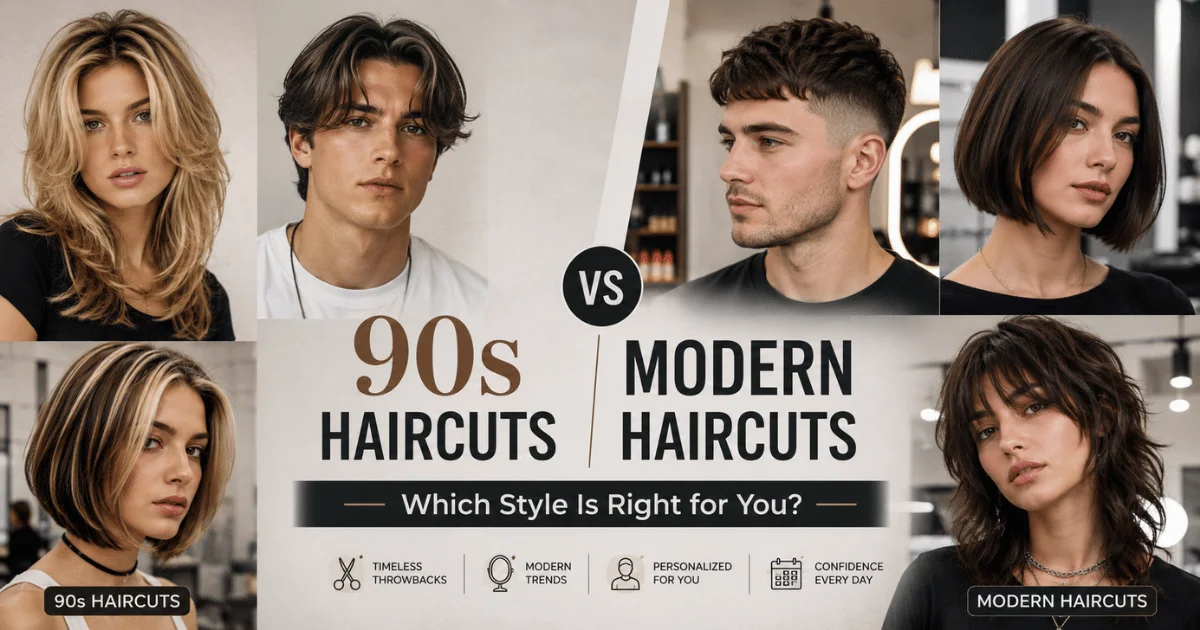
Men’s haircut trends rarely disappear forever. Instead, they return with updated shapes, cleaner finishes, and modern styling techniques.
Curtain hair, Caesar cuts, high-top fades, textured spikes, buzz cuts, and relaxed grunge layers helped define 90s men’s haircuts. Many of these styles are popular again, but today’s versions are often more personalized, more textured, and more precisely blended.
The biggest difference between 90s haircuts vs modern haircuts is not always the haircut itself. It is how the haircut is shaped, blended, styled, and adapted to the person wearing it.
Traditional 90s hairstyles often featured fuller sides, recognizable silhouettes, and noticeable styling products. Modern haircuts usually use cleaner tapering, softer transitions, natural-looking texture, and adjustments based on face shape, hair type, and lifestyle.
At HQ Barbershop in Oak Lawn, Dallas, our barbers work with both classic and modern men’s hairstyles, helping clients adapt a haircut to their hair type, personal style, and preferred finish.
In this guide, we’ll compare 90s haircuts vs modern haircuts, look at popular styles from both eras, explain how classic looks have evolved, and help you decide which approach fits your hair and everyday routine.
90s Haircuts vs Modern Haircuts at a Glance

| Feature | 90s Haircuts | Modern Haircuts |
| Overall appearance | Bold, relaxed, or noticeably styled | Clean, customized, and refined |
| Sides | Often fuller or lightly tapered | Faded, tapered, or precisely blended |
| Top | Longer, structured, or clearly separated | Layered, textured, and personalized |
| Hairline | Usually soft and natural | May be natural or sharply detailed |
| Texture | Glossy, separated, stiff, or deliberately messy | Soft, controlled, touchable, and natural |
| Styling products | Gel, mousse, hairspray, and shiny pomade | Matte clay, paste, texture cream, and sea salt spray |
| Personalization | Often based on a recognizable trend | Adapted to hair density, growth pattern, and face shape |
| Maintenance | Usually grows out softly | Depends on the fade, taper, and level of detailing |
What Defines a 90s Men’s Haircut?

There was no single haircut that represented the entire 1990s. Men wore everything from extremely short buzz cuts to long, center-parted grunge hair.
However, many recognizable 90s hairstyles shared a few common characteristics:
- Fuller sides with less aggressive fading
- Visible center or side parts
- Longer sections around the forehead
- Strongly separated spikes
- Square or structured silhouettes
- Noticeable use of gel, mousse, or hairspray
- Softer necklines and less detailed blending
- Styles influenced by music, movies, sports, and youth culture
A 90s haircut was often designed to have a recognizable identity. Curtains were full and floppy. High tops emphasized height and geometry. Spiky hair relied on obvious separation and strong styling products.
You can explore more individual styles in our complete guide to trendy 90s haircut styles for men. This article focuses specifically on how those retro styles compare with their modern versions.
What Makes a Men’s Haircut Look Modern?
A modern haircut does not have to be a completely new style. In many cases, it is an older haircut reshaped with current barbering techniques.
Modern barbering places greater emphasis on personalization. Two men can request the same haircut but receive different lengths, tapers, layers, and styling recommendations.
A barber may adjust the haircut based on:
- Hair thickness and density
- Straight, wavy, curly, or coily texture
- Natural growth patterns and cowlicks
- Head and face shape
- Hairline or thinning areas
- Workplace requirements
- Preferred maintenance schedule
- Daily styling time
Modern haircuts commonly feature gradual tapering, seamless blending, purposeful layering, controlled texture, and cleaner work around the temples, ears, and neckline.
However, modern does not automatically mean a high skin fade. Medium-length scissor cuts, longer textured hairstyles, and natural-looking tapers can all feel current when the proportions are carefully controlled.
The Main Differences Between 90s and Modern Haircuts
Shape and Silhouette
Many 90s haircuts had instantly recognizable shapes. Curtains were full around the sides and front. High tops were tall and angular. Gelled spikes created a sharp, separated outline. Grunge hairstyles were intentionally loose and grown out.
Modern versions normally preserve the identity of the original haircut while refining its proportions.
A modern curtain haircut may have less weight around the ears. A current high top may use smoother fading and slightly softer corners. Modern spikes usually look textured rather than stiff. The goal is not always to remove the retro character. It is to make the shape easier to wear today.
Sides and Back
The sides are one of the clearest differences when comparing 90s haircuts vs modern haircuts.
Traditional 90s styles frequently kept more length and fullness around the sides. Modern barbers may use a low taper, temple fade, neckline taper, or scissor taper to create a cleaner outline.
However, the type of fade matters.
Adding a high skin fade to every 90s-inspired haircut can destroy the original silhouette. Curtains, grunge layers, and medium-length styles usually need some weight around the sides to maintain their movement.
A low taper or subtle cleanup is often the better choice.
Texture
Classic 90s texture was usually visible and deliberate. Individual spikes, strands, curls, or sections were separated with styling products. Modern texture is often created during the haircut itself.
Point cutting, layering, and controlled weight removal help the hair separate naturally. This allows the wearer to create movement without covering the hair in heavy gel.
Styling Finish
Wet-look gel, strong mousse, hairspray, and glossy pomade were common elements of many 90s hairstyles. Modern styling often favors matte or low-shine products. These products help create movement while keeping the hair soft and touchable.
High-shine styling can still look good today, especially for slicked-back hair or formal side parts. The difference is that the shine is usually chosen intentionally rather than applied to every hairstyle.
Personalization
In the 1990s, many men copied recognizable hairstyles from actors, musicians, athletes, and magazine photos. Today, reference photos are still useful, but barbers are more likely to adapt the haircut to the individual.
For example, a curtain haircut may need more layering for thick hair, less texturizing for fine hair, or an off-center part for someone with a strong cowlick. The haircut name may stay the same, but the internal structure can be completely different.
Maintenance
A softer 90s-inspired haircut often tolerates growth well because the sides and neckline are not sharply defined.
Modern fades and detailed lineups can look extremely clean after an appointment, but they normally require more frequent maintenance. The right choice depends partly on how often you are prepared to visit your barber.
Classic 90s Haircuts Compared With Their Modern Versions

1. Classic 90s Curtains vs Modern Textured Curtains
The classic 90s curtain haircut features a center part with enough front length for the hair to fall on both sides of the face.
The sides are usually kept relatively full, producing a soft and youthful silhouette. The style works particularly well on straight or naturally wavy hair.
Modern textured curtains keep the recognizable middle part but introduce more deliberate layering. A barber may remove excess weight around the sides, create movement through the front, and use a subtle taper around the ears and neckline.
The updated version looks cleaner without losing its relaxed character.
Choose classic curtains when: You want an obvious retro appearance and do not mind fullness around the sides.
Choose modern curtains when: You want similar flow with cleaner edges, better movement, and easier styling.
What to tell your barber: “Keep enough length for a center part, add soft layers for movement, and clean around the ears without taking the sides too short.”
2. 90s Caesar Cut vs Modern Textured Caesar

The traditional Caesar cut has a short, relatively even top with a straight fringe directed toward the forehead.
Older versions can appear heavy or block-like when the top and sides are kept at similar lengths.
The modern Caesar normally includes more texture through the top and a gradual taper through the sides. The fringe may remain straight or be softened slightly to complement the wearer’s hairline and facial proportions.
Choose the classic Caesar when: You prefer a uniform, uncomplicated shape with minimal styling.
Choose the modern Caesar when: You want less bulk, more movement, and cleaner definition around the temples.
What to tell your barber: “Give me a short Caesar with a controlled fringe, textured top, and low taper instead of keeping everything one length.”
3. 90s High Top vs Modern High-Top Fade

The 90s high top emphasized height, structure, and a strong geometric outline.
It works particularly well on dense, tightly curled, and coily hair that can naturally support the shape.
A modern high-top fade may preserve the height while introducing smoother blending, cleaner tapering, and slightly softer corners. The barber can also adjust the shape to complement the client’s head and face rather than following a completely rigid outline.
Choose a classic high top when: You want a dramatic, graphic, and unmistakably retro haircut.
Choose a modern high top when: You want visible height with smoother transitions and a more personalized shape.
What to tell your barber: “Keep the height and structured outline, but taper the sides cleanly and shape the top to complement my head.”
4. Gelled 90s Spikes vs Modern Textured Spiky Hair

Traditional 90s spikes were deliberately separated and usually secured with a noticeable amount of gel.
The result was glossy, rigid, and strongly defined.
Modern spiky hair creates lift and separation without making each section look hard. The top is cut with texture so that a small amount of matte clay or styling paste can create movement.
Choose classic spikes when: You want a bold throwback style with clearly separated sections.
Choose modern spiky hair when: You want height and texture that remain suitable for everyday wear.
What to tell your barber: “Leave enough length to lift the top, add choppy texture, and keep the finish natural instead of creating stiff spikes.”
5. 90s Grunge Hair vs Modern Shaggy Layers

Grunge-inspired hair was often medium or long, center-parted, and deliberately unpolished. The hair could look grown out instead of carefully shaped. That relaxed appearance was an important part of the style.
The modern version keeps the loose movement but adds intentional layering. Excess weight may be removed around the sides, while the front is shaped to frame the face. A modern shag or flow haircut should look relaxed without appearing neglected.
Choose classic grunge hair when: You prefer noticeable length, fullness, and an intentionally undone finish.
Choose modern shaggy layers when: You want medium or long hair with movement, balance, and a clearer shape.
What to tell your barber: “Keep the relaxed 90s length, but add balanced layers and remove enough weight to prevent the sides from becoming bulky.”
6. Traditional Buzz Cut vs Modern Buzz Cut With a Fade

A traditional buzz cut usually uses one guard length across most of the head or only a small difference between the top and sides. The result is simple, balanced, and easy to maintain.
A modern buzz cut may include a low fade, temple taper, detailed hairline, or stronger contrast between the top and sides. The modern version can look sharper immediately after the appointment. However, the faded and lined sections may lose their definition as the hair grows.
Choose a traditional buzz cut when: You value simplicity, minimal styling, and an even grow-out.
Choose a modern buzz cut when: You want more contrast, sharper edges, and a detailed finish.
What to tell your barber: “Keep the top short and even, then add a low fade or temple taper without taking it too high.”
After choosing a faded or clipper-based style, follow these tips on how to maintain a clipper cut between appointments.
7. 90s Side Part vs Modern Textured Side Part

A classic 90s side part often featured noticeable length, a clearly defined part, and a smooth finish created with gel or pomade.
The sides could remain relatively full, giving the haircut a traditional and structured appearance.
A modern side part is usually softer and less rigid. The barber may use scissor work through the top, reduce excess weight, and create a gradual transition into tapered sides.
The part does not always need to be shaved or strongly defined. Following the hair’s natural separation often produces a more flexible result.
Choose a classic side part when: You prefer a polished, structured, and traditional style.
Choose a modern side part when: You want a professional haircut with softer movement and less visible product.
What to tell your barber: “Follow my natural side part, keep enough length to style it, and use a subtle taper with soft texture through the top.”
8. 90s Frosted Tips vs Modern Highlighted Texture

Traditional frosted tips created strong contrast between bleached ends and darker roots. The hair was often spiked so the lighter ends remained highly visible.
A modern interpretation usually uses softer and more blended highlights. Instead of coloring only the ends, lighter sections may be distributed through the textured top for a gradual transition.
Choose classic frosted tips when: You want an obvious nostalgic statement with strong color contrast.
Modern highlighted texture when: You want brightness and dimension without recreating the exact original style.
What to tell your barber or colorist: “I want 90s-inspired brightness through the top, but with softer blending and less contrast at the roots.”
Which Style Is Better for Your Hair Type?
Your hair type plays a major role in whether a classic 90s haircut or a modern interpretation will work better.
Straight Hair
Straight hair works especially well with:
- Classic or modern curtains
- Caesar cuts
- Textured spikes
- Side parts
- Buzz cuts
Modern layering can prevent medium-length straight hair from lying completely flat.
However, very fine straight hair should not be excessively thinned. Removing too much weight may make the hair appear less dense.
Wavy Hair
Wavy hair is naturally suited to modernized 90s hairstyles because it already has the movement many of these cuts require.
Good options include:
- Textured curtains
- Modern grunge layers
- Medium-length flow
- Soft side parts
- Low-tapered shag haircuts
The goal is usually to preserve the natural wave rather than flatten it with heavy gel or remove too much bulk.
Curly or Coily Hair
Curly and coily hair can work well with:
- High tops
- Tapered Afros
- Curly Caesar cuts
- Short curls with a temple taper
- Longer layered curls
The haircut should preserve the natural curl pattern while controlling the overall shape and perimeter.
A barber must also account for shrinkage before deciding how much length to remove.
Thick Hair
Thick hair can support both structured retro silhouettes and heavily textured modern haircuts.
The main challenge is controlling bulk. Strategic layering and weight removal can improve movement, but the hair should not be thinned so aggressively that it becomes difficult to control.
Fine or Thinning Hair
Short Caesars, soft side parts, textured crops, and buzz cuts can make fine hair appear more balanced.
Long, highly separated curtains may reveal thinner areas. Heavy wet-look products can also make fine strands clump together, exposing more scalp.
A lightweight matte product is often a better option.
How Face Shape Affects Your Choice
The decision between 90s haircuts and modern haircuts should not be based on trends alone.
The height, width, and placement of a haircut can change how the face appears.
Oval Face
Oval faces can generally wear most retro and modern haircut shapes.
Curtains, Caesars, side parts, high tops, buzz cuts, and textured crops can all work when the proportions are properly controlled.
Round Face
Round faces often benefit from additional height and slightly shorter sides.
Modern high tops, textured spikes, and side parts with controlled volume can create a more elongated appearance.
Very full sides may make the face appear wider.
Square Face
Square faces work well with structured haircuts such as buzz cuts, Caesars, and high tops.
Softer curtains or layered hairstyles can also create an effective contrast with a strong jawline.
Heart-Shaped Face
Heart-shaped faces usually have a wider forehead and a narrower chin.
Medium texture, controlled curtains, and softly tapered sides can create better balance than excessive height or width near the temples.
Read our complete guide to the best haircuts for heart-shaped face men for more personalized recommendations.
Long or Rectangular Face
Long faces should be careful with extreme height and extremely tight sides.
Fuller sides, a fringe, or medium-length movement can help create more balanced proportions.
Which Haircut Fits Your Lifestyle?
A haircut may look great in a reference photo but still be unsuitable for your schedule, workplace, or daily routine.
Traditional 90s Haircut When:
- You want noticeable retro character
- You prefer longer or fuller sides
- You like a visible part, fringe, or recognizable silhouette
- You want a haircut that grows out relatively softly
- You enjoy using gel, mousse, or high-shine products
- Your workplace allows a more relaxed hairstyle
Modern Haircut When:
- You prefer cleaner blending and sharper detailing
- You are comfortable visiting the barber more frequently
- You want the haircut closely customized to your hair type
- You prefer matte texture and controlled movement
- You need a polished look for work or formal settings
- You want a haircut with a clearly maintained outline
Modernized 90s Haircut When:
- You like retro inspiration but do not want a costume-like result
- You want natural movement with cleaner sides
- You need a style that works in professional and casual settings
- You want a recognizable haircut adapted to your face shape
- You prefer modern barbering techniques with nostalgic character
For many men, a modernized 90s haircut provides the best balance. It preserves the personality of the original style while making the shape easier to maintain and wear today.
90s Styling Products vs Modern Styling Products
| Styling Goal | Traditional 90s Product | Modern Alternative |
| Strong spikes | Hard-hold gel | Matte clay or firm styling paste |
| Defined curls | Mousse or wet-look gel | Curl cream or lightweight defining gel |
| Slick side part | High-shine gel or pomade | Low-shine pomade or grooming cream |
| Grunge texture | Hairspray or minimal product | Sea salt spray or texture cream |
| Curtain movement | Mousse and hairspray | Light styling cream and blow-dry primer |
| Added volume | Strong mousse | Volumizing spray or texture powder |
The right product depends on your hair type and desired finish. Begin with a small amount. Applying too much product can flatten natural movement, create buildup, and make the hair appear greasy.
How Often Do 90s and Modern Haircuts Need Maintenance?
Maintenance depends more on the details of the haircut than the decade that inspired it.
| Haircut Type | Typical Maintenance Schedule |
| Skin fade or sharp lineup | Every 2 to 3 weeks |
| Low taper or short Caesar | Every 3 to 4 weeks |
| Buzz cut | Every 2 to 4 weeks |
| Curtains or medium layers | Every 4 to 6 weeks |
| Grunge-inspired flow | Every 6 to 8 weeks |
| High top or structured shape | Every 2 to 4 weeks |
A softer 90s-inspired haircut may grow out more naturally because it has less contrast between the top and sides.
A detailed modern fade usually needs earlier touch-ups because its clean transition becomes less visible as the hair grows.
What Should You Tell Your Barber?
Avoid asking only for “a 90s haircut.” That description is too broad. Instead, explain which parts of the retro style you want to keep and which parts you want modernized.
For example:
“I like the length and movement of this 90s haircut, but I want cleaner edges and less weight around the sides.”
Or:
“Keep the retro center part, but add soft layers and a subtle taper so it looks more current.”
Bring two or three reference photos when possible:
- A front view showing the fringe, part, or overall shape
- A side view showing the preferred taper and length
- A photo showing the desired texture and styling finish
You should also tell your barber:
- How much time you spend styling your hair
- How often you plan to get it trimmed
- Whether you prefer matte or shiny products
- Whether your workplace has grooming requirements
- Which areas of your hair are difficult to control
- Whether you want the style to grow out softly or remain sharply defined
Clear communication allows your barber to adapt the inspiration photo to your actual hair.
Common Mistakes When Modernizing a 90s Haircut
Adding the Wrong Fade
A high skin fade can completely change the shape of curtains, grunge layers, and medium-length hairstyles.
Choose a low taper, temple taper, or subtle scissor cleanup when preserving fullness is important.
Removing Too Much Length
Many recognizable 90s hairstyles require several inches of length through the front and top.
Cutting the fringe too short can make curtains, flow, or layered grunge hair impossible to style.
Using Too Much Product
Heavy gel or pomade can flatten natural texture and make a modern haircut look greasy.
Start with a small amount of product and add more only where necessary.
Ignoring Natural Growth Patterns
A strong cowlick may prevent a perfectly symmetrical center part.
Your barber may recommend an off-center part, adjusted layering, or a different styling direction.
The haircut should cooperate with your natural growth pattern instead of forcing the hair into an unrealistic shape.
Copying a Photo Without Personalizing It
The same haircut will not look identical on every person.
Hair density, curl pattern, forehead size, hairline, face shape, and head shape can all affect the final appearance.
Use photos to communicate your preferred direction, but allow your barber to adjust the details.
Choosing a Style Based Only on Trends
A popular haircut is not automatically the best haircut for your routine.
Consider how much maintenance, styling, and barbering frequency the style requires before making your decision.
Are 90s Haircuts Better Than Modern Haircuts?
Neither category is automatically better. A traditional 90s haircut may be better when you want stronger nostalgia, softer growth, fuller sides, and a less polished silhouette.
A modern haircut may be better when you want precise blending, cleaner edges, customized texture, and a more detailed finish. For most men, the ideal option sits somewhere between the two.
A modernized 90s haircut keeps the character of the original style while using current techniques to improve its balance, movement, and wearability. The right choice should complement your hair type, face shape, lifestyle, and preferred maintenance schedule, not simply follow a trend.
Frequently Asked Questions About 90s Haircuts vs Modern Haircuts
Q1. What is the main difference between 90s and modern haircuts?
Answer: Traditional 90s haircuts often have fuller sides, stronger silhouettes, and more visible styling products. Modern haircuts usually use cleaner tapers, customized layering, controlled texture, and matte or natural finishes.
Q2. Are 90s men’s haircuts coming back?
Answer: Many recognizable 90s styles have returned in updated forms. Curtains, center parts, layered flow, high tops, Caesar cuts, textured spikes, and buzz cuts can all be worn with modern tapering and styling.
Q3. Can a 90s haircut look professional?
Answer: Yes. Choose a controlled version with balanced length, clean edges, and subtle styling. Modern curtains, tapered Caesars, and neatly layered side parts can work well in professional environments.
Q4. Do all modern haircuts need a skin fade?
Answer: No. A modern haircut may use scissor tapering, a low taper, a temple taper, or simply cleaner perimeter work. A skin fade is only one option.
Q5. Which 90s haircut is easiest to modernize?
Answer: Curtains, Caesar cuts, buzz cuts, side parts, and layered medium-length hairstyles are among the easiest to update. Small changes to the taper, texture, and finish can make them feel current.
Q6. Are 90s haircuts low-maintenance?
Answer: Some are. Fuller and softer cuts often grow out more gradually than sharp modern fades. However, longer curtains and layered hairstyles may still require daily styling.
Q7. What product should I use for a modern 90s hairstyle?
Answer: Use a lightweight styling cream, matte clay, curl cream, paste, or sea salt spray based on your hair type. The goal is usually to create movement without making the hair stiff or greasy.
Q8. Should I choose classic curtains or modern curtains?
Answer: Choose classic curtains for a fuller and more obvious retro look. Choose modern curtains when you want cleaner sides, controlled layering, and easier everyday styling.
Q9. Can thin hair work with a 90s hairstyle?
Answer: Yes, but the style should be selected carefully. Short Caesars, side parts, textured crops, and buzz cuts can work well. Avoid excessive thinning and heavy wet-look products that expose more scalp.
Q10. How do I ask my barber for a modern 90s haircut?
Answer: Show reference photos and explain which retro features you want to keep. Ask your barber to adapt the length, taper, texture, and outline to your hair type and face shape.
Find the Right Version of Your Favorite 90s Haircut
The best haircut is not necessarily the most traditional or the most modern. It is the version that works with your natural hair, complements your facial proportions, and fits your daily styling routine.
At HQ Barbershop in Oak Lawn, Dallas, our barbers can help you preserve the recognizable character of a 90s haircut while updating the shape, texture, blending, and finish for a more modern and wearable result.
Whether you want classic curtain hair, a Caesar, high-top fade, textured spikes, or another retro-inspired style, bring your inspiration photos and explain how much maintenance you want. Your barber can then recommend the right balance between 90s style and modern barbering precision.
For more hairstyle inspiration, explore our guide to trendy 90s haircut styles for men or compare classic trends with our collection of iconic 80s haircuts for men.