December 21, 2025
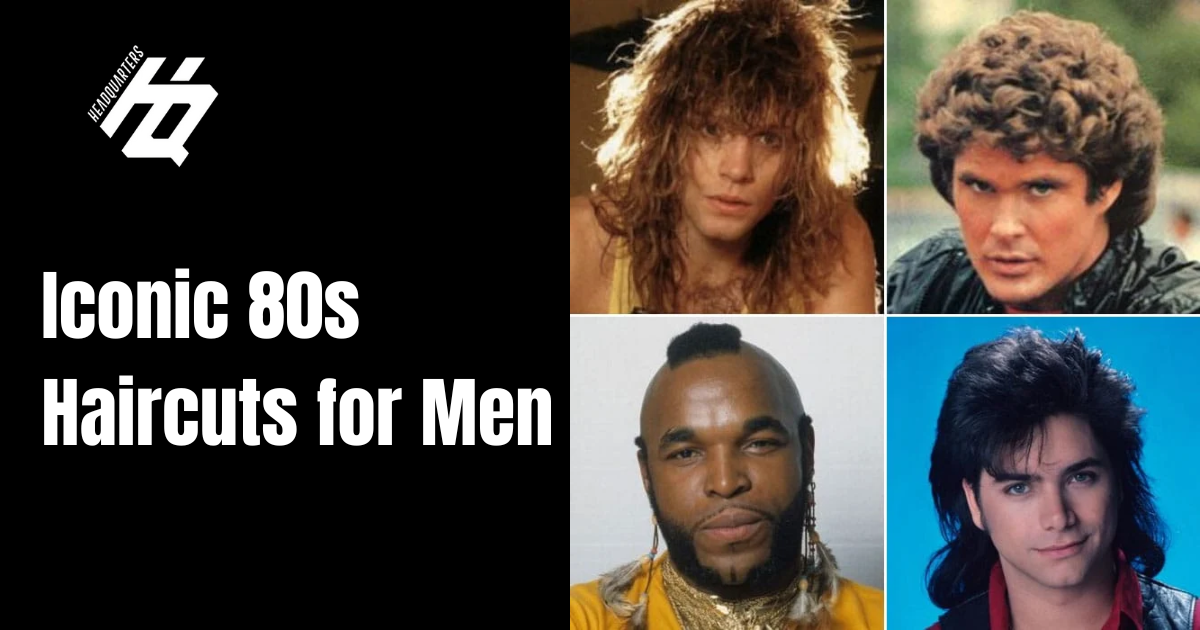

The most iconic 80s haircuts for men include the mullet, pompadour, hi-top fade, flat top, Jheri curl, feathered hair, mohawk, shag, and slicked-back styles. Many of these looks were defined by volume, texture, sharp shape, or longer layers, and several have returned in updated forms that are easier to wear in 2026.
Men’s hairstyles in the 1980s varied widely across music, sports, street style, and professional settings. Rock-inspired cuts often featured longer layers and exaggerated volume, while styles such as the hi-top fade and flat top relied on clean structure and defined lines. Slicked-back and side-parted styles offered a more polished alternative.
In this guide, you’ll find more than 30 classic 80s hairstyles for men, along with modern versions, suitable hair types, maintenance considerations, and tips for choosing a style that works with your current haircut and grooming routine.
At HQ Barbershop, our barbers can adapt classic 80s-inspired cuts with modern shaping, tapering, texture, and finishing techniques for a cleaner, more wearable result.
80s Haircuts for Men at a Glance
| Style | Known for | Modern version |
|---|---|---|
| Mullet | Shorter front, longer back | Textured or tapered mullet |
| Pompadour | Height and swept-back volume | Softer textured pompadour |
| Hi-Top Fade | Height with faded sides | Cleaner taper or fade |
| Flat Top | Structured upper shape | Modern flat-top fade |
| Shag | Layered texture | Softer textured shag |
| Mohawk | Strong center strip | Faded or textured mohawk |
| Slick Back | Controlled backward styling | Lower-shine slick back |
| Feathered Hair | Outward layered movement | Natural layered flow |
Most Favorable & Trending 80s Haircuts (Modern-Wear Friendly)
These authentic 80s cuts work right now without looking outdated. You’ll see them on runways, Instagram, and barbershops because they blend retro edge with current style. Easy to wear, easier to pull off in 2026, and adaptable as a hairstyle for different face shape.
1. Mullet (Classic / Modern / Baby Mullet)

This 80s-style haircut for men became the signature look for rock stars and athletes. David Bowie pioneered it in 1973, and Billy Ray Cyrus made it famous nationwide. Barbers buzz the top and sides short with a #3 or #4 clipper guard. The back grows 4-6 inches past your collar, creating that “business up front, party in back” look. Modern mullets cut the back at the neckline length instead. Baby mullets keep back hair just below the ears. This retro haircut returned in 2020 through TikTok trends.
2. Textured Shag / Rock Shag

The textured shag defined 80s men’s hairstyles for rock stars wanting that messy, effortless look. Mick Jagger and Keith Richards made this choppy cut iconic. Stylists use point-cutting scissors to create uneven layers falling 3-5 inches long. The layers start at your crown and cascade down naturally. Unlike the mullet’s harsh disconnect, this cut blends smoothly. Rock shags need zero styling, just towel-dry and go. The messy texture hides bad hair days. Modern versions add softer, feathered ends.
3. Feathered Hair (Layered Blowout)

Feathered hair became the polished 80s haircuts for men seeking that clean-cut celebrity appeal. Rob Lowe and Tom Cruise wore this swept-back style religiously. Stylists cut multiple layers through the crown, then use a round brush with a blow dryer to flip ends outward.
The layers typically measure 2-4 inches, creating volume and movement. You needed mousse and high heat to lock that feathered flip. The style required daily blow-drying, skip it and you’d lose that signature wing effect. Today’s versions use texturizing spray instead of heavy mousse.
4. Permed Hair / Loose Curls

Permed hair transformed 80s Haircuts for Men by giving straight hair permanent curls and volume. Jon Bon Jovi and Michael Hutchence made these chemical curls famous. Barbers wrap your hair around perm rods, apply a chemical solution that breaks hair bonds, then neutralize to lock in curls.
The salon visit takes 2-3 hours. Loose curls use bigger rods for gentle waves instead of tight spirals. Results last 3-6 months but cause dryness. You must use deep conditioner weekly to prevent breakage and frizz.
5. Pompadour (80s Volume Version)

The pompadour ruled 80s Haircuts for Men with its dramatic height and volume. Barbers clip sides short, leaving 4-6 inches on top for lift. You blow-dry hair upward and backward with a round brush, then apply strong-hold pomade or gel.
The front stands 3-4 inches above your forehead, creating that signature tall look. You must blow-dry daily and finish with hairspray to lock the height. Otherwise you’ll watch your pompadour flatten by noon. The towering volume separated bold style from basic cuts.
6. Quiff (Big Front Lift)

The quiff was a go-to 80s haircuts for men who wanted front height without extreme effort. Barbers cut sides short, leaving 3-5 inches on top. You blow-dry the front section upward using a round brush and volumizing mousse.
The front lifts 2-3 inches above your forehead. Add medium-hold pomade to shape it, then finish with spray. Without these products, your hair falls flat by lunch. Less dramatic than the pompadour, but still commands attention in any room.
7. Slicked-Back “Power Hair.“

The slicked-back style became the ultimate 80s haircuts for men in corporate and nightlife scenes. Barbers cut hair to 3-4 inches throughout, keeping length consistent. You comb everything straight back from your forehead using wet-look gel or heavy pomade.
The hair sits flat against your head with serious shine. Wall Street executives and club-goers both wore this look for that polished, commanding presence. You need a generous product apply to damp hair and comb through repeatedly. The wet shine lasted all day, but felt stiff and crunchy to touch.
8. Long Waves / Surfer Hair

The long waves brought California beach vibes to 80s men’s hairstyles nationwide. Hair grows 6-10 inches, falling around shoulder length with natural texture. Surfers got this look from saltwater and sun exposure, creating loose waves.
You achieve it by spraying sea salt texturizer on damp hair and scrunching while air-drying. Trim split ends every 2-3 months only. The carefree length needed zero daily styling. This relaxed look separated beach culture from buttoned-up corporate life during the decade.
9. Classic Side-Part with Volume

The side-part became a polished 80s haircuts for men in business and professional settings. Barbers cut hair 2-4 inches on top, shorter on sides. You create a sharp part line on one side using a fine-tooth comb.
Blow-dry the longer section upward for height, then sweep it across. Apply light pomade or mousse for hold and shine. The parted side lifts 1-2 inches above your scalp. This clean look worked in boardrooms and formal events. Daily combing keeps that crisp part visible.
10. Skater Haircut (Long Fringe, Messy Layers)

The skater haircut was the signature 80s men’s hairstyle in skateboarding and punk culture. Barbers cut choppy layers throughout, leaving the fringe 4-6 inches long to hang over your eyebrows. The back and sides stay medium length with rough texture.
You just air-dry and leave, no products needed. The long fringe covers your eyes constantly, so you shake your head back to see. Skaters loved this because it moved freely during tricks and required zero upkeep.
Iconic & Undeniably 80s Haircuts (Cultural Staples)
You’ll recognize these cuts immediately as they’re pure 1980s through and through. These styles shaped how the decade looked in music videos, movies, and everyday life. When you spot one, there’s no question which era it came from.
11. Hi-Top Fade

The hi-top fade revolutionized 80s Haircuts for Men in hip-hop and basketball culture. Barbers use clippers to fade sides and back down to skin, leaving 2-4 inches of natural curls on top. The top section stands straight up, creating a flat, box-like shape.
You shape it with a pick comb and hold with strong gel or activator spray. The height separates you from everyone, literally standing inches above your head. This cut needs weekly barber visits to maintain crisp fade lines.
12. Flat Top

The flat top was a military-inspired 80s haircuts for men that entered mainstream fashion. Barbers buzz sides short with clippers, leaving 1-2 inches on top cut perfectly horizontal. They use electric trimmers to level the top surface flat like a tabletop.
You stand with hair straight up with strong-hold gel or styling wax daily. The squared-off top creates sharp right angles across your head.
13. Flat Top Fade

The flat top fade blended military precision with street style in 80s men’s hairstyles. Barbers fade sides and back from skin to the flat top, creating smooth, gradual transitions. The top stays 1-2 inches, cut perfectly horizontal and squared off.
They use clippers for the fade and trimmers to level the top surface. You apply a strong gel daily to keep your hair standing vertically. The fade adds dimension compared to the basic flat top’s blunt sides.
14. Jheri Curl

The Jheri curl became an iconic 80s Haircuts for Men in R&B and pop music scenes. Stylists apply a two-step chemical process. First relaxer softens natural curls, then perming solution creates tight, glossy ringlets.
The treatment takes 3-4 hours in the salon. You maintain shine with activator spray and moisturizer applied twice daily. The curls drip with wet-looking gloss constantly, often staining pillowcases and shirt collars. This high-maintenance style requires monthly salon touch-ups as new growth appears.
15. Spiky Punk Hair

The spiky punk hair was pure rebellion in 80s men’s hairstyles through underground music culture. Barbers cut hair short on the sides, leaving 2-4 inches on top for spikes. You rub super-hold gel or hair glue through damp hair, then pull sections straight up into sharp points.
The spikes stick up 2-3 inches high, creating an aggressive look. Punk rockers often bleached tips blonde or added bright colors for extra shock. This style holds all day and the products turn rock-hard like cement. You must wash and restyle daily because dried gel makes hair stiff and impossible to reshape.
16. Mohawk (Punk / Hardcore)

The Mohawk was the most extreme80s haircut for men in punk and hardcore music scenes. Barbers shave both sides of your head completely, leaving a 2-4 inch strip from forehead to neck. You spike the center strip straight up using hair glue or Got2b spray.
The strip stands 4-6 inches high when styled. Punks dyed it neon colors like green or red for shock value. This cut needs 30 minutes daily styling and weekly side shaves. The dramatic strip separated real punks from weekend rebels.
17. Devilock (Forward-Hanging Fringe)

The devilock was a wild 80s men’s hairstyle straight from punk rock’s darker side. In this haircut, your barber shaves the sides and back completely while keeping one long section at your forehead.
That front piece grows 6-10 inches and hangs down over your face like a curtain. You let it fall naturally, no styling needed. The Misfits made this cut famous in hardcore punk scenes. The hanging fringe covers one or both eyes constantly, giving you that mysterious, dangerous look.
18. Hair Metal Blowout (Big, Teased Rock Hair)

The hair metal blowout was the most dramatic 80s hairstyle for men in rock and glam scenes. In this cut, your barber layers hair to 6-8 inches throughout for maximum volume. You blow-dry sections upward with a round brush, then backcomb roots aggressively to add height.
Apply volumizing mousse to damp hair first, then finish with tons of aerosol hairspray. Your hair stands 4-5 inches off your scalp in all directions. This look needs 45 minutes daily styling and feels crunchy from all that product.
19. Curly Rocker Hair (Wild, Voluminous Curls)

The curly rocker hair was the untamed 80s men’s hairstyle for rock and metal musicians. In this look, you grow naturally curly hair 8-12 inches long around your head. Your barber cuts layers to prevent triangle shapes and boost width.
You scrunch curl-enhancing mousse into damp hair, then let it air-dry completely wild. The curls spring outward in every direction, making your head look twice its size.
20. Layered Mullet (Rock Version)

The layered mullet was the rock-and-roll twist on 80s men’s hairstyles that added movement to the classic cut. In this version, your barber keeps the top and sides short but cuts the back in 3-4 distinct layers instead of one length.
Each layer falls differently, creating texture and flow when you move. You apply texturizing spray to damp hair for separation between layers. The back reaches your shoulders but doesn’t hang flat like the classic mullet.
Everyday & Casual 80s Men’s Haircuts
Not every guy rocked extreme styles back then. These were the normal cuts you’d see at school, work, or the grocery store. They looked good without demanding attention or hours of styling time each morning.
21. Bowl Cut

The bowl cut was a controversial 80s haircut for men that split opinions sharply. In this style, your barber cuts hair the same length all around your head, creating a circular shape like placing a bowl on top.
The fringe sits straight across your forehead at eyebrow level. Sides and back get cut to match that same length – usually 2-3 inches. You just wash and let it dry naturally. No styling products needed at all. This cut worked for kids and some alternative music fans.
22. Buzz Cut

The buzz cut was the no-nonsense 80s men’s hairstyle borrowed from military barracks. In this cut, your barber runs clippers with one guard size over your entire head. Common lengths are #1, #2, or #3 guards – each leaving hair about 1/8 to 3/8 inches long.
The whole head gets the same short length with zero variation. You need absolutely no styling, just shower and go. Athletes and military guys wore this because it stayed cool during physical activity.
23. Crop Cut (Short Textured Cut)

The crop cut brought European minimalism to 80s men’s hairstyles in urban fashion scenes. In this style, your barber cuts hair short on top – about 1-2 inches – with slightly shorter sides. The fringe sits forward and is textured instead of slicked back.
You work matte paste or clay through dry hair to create separation and piece-y texture. The cut stays tight to your head without height or volume. Modern guys rediscovered this cut in the 2010s.
24. High-and-Tight (Late-80s Civilian Adoption)

The high-and-tight crossed from military bases into 80s men’s hairstyles during the late decade. In this cut, your barber buzzes sides and back down to skin or #1 guard, leaving 1-2 inches on top.
The contrast between shaved sides and longer top creates a dramatic height difference. You can style the top with light pomade or leave it natural. Marines wore this for decades, but civilians adopted it for that clean, masculine edge. This cut needs weekly touch-ups to keep sides fresh.
25. Caesar Cut (Short Fringe Forward)

The Caesar cut was a Roman-inspired 80s haircut for men that kept things short and practical. In this style, your barber cuts hair 1-2 inches all around with the fringe brushed straight forward.
The fringe covers part of your forehead horizontally instead of swept back or spiked up. Sides blend evenly into the top without harsh lines. You apply light styling cream and push everything forward with your fingers.
Niche, Bold & Subculture 80s Hairstyles
These cuts came from specific music scenes and underground movements. You wore them to stand apart, make a statement, or show which group you ran with. They took real confidence because most people stared or judged you hard for rocking these rebellious styles.
26. Rat Tail

The rat tail was the strangest 80s men’s hairstyle that confused as many people as it impressed. In this cut, your barber cuts your hair short everywhere except one thin section at the nape. That single strand grows 6-12 inches long, hanging down your neck like a skinny tail.
Some guys braided it, others left it straight. You just let it grow and trim the rest of your head normally. Kids wore this more than adults, thinking it looked rebellious. The tail needed months to grow out properly.
27. Side Spikes (Punk / Goth)

The side spikes brought asymmetry to 80s men’s hairstyles in punk and goth scenes. In this cut, your barber shaves one side of your head while leaving 3-4 inches on the other side. You spike the longer side straight up or outward using hair glue or Got2B spray.
The shaved side creates a dramatic contrast against those standing spikes. Goths often dyed the spiked section black or dark purple. You need 20 minutes daily to build those spikes properly
28. Punk Liberty Spikes

The punk liberty spikes were the tallest 80s hairstyle for men in hardcore punk culture. In this extreme cut, your barber cuts hair 4-6 inches all over your head. You section hair into 10-15 individual spikes using hair glue or elmers glue mixed with gel.
Each spike stands straight up like the Statue of Liberty’s crown, some reaching 8-10 inches high. Punks dyed tips bright colors like pink, blue, or green for maximum shock. This takes 45-60 minutes to style and lasts multiple days once dried.
29. Goth Fringe / Dark Wave Hair

The goth fringe brought darkness to 80s men’s hairstyles through post-punk and dark wave music. In this look, your barber cuts hair medium length – 4-6 inches with heavy fringe covering your forehead and eyes.
The fringe sweeps across one side dramatically, often covering half your face. You blow-dry it forward and across, then use light hairspray to hold position. Goths dyed everything jet black for that pale-skin contrast. The hair falls naturally without spikes or height. You need to trim the fringe every few weeks so it doesn’t grow past your chin.
30. Wings / Flow Haircut (Early 80s Teen Look)

The wings haircut was the signature 80s men’s hairstyle for teenage skaters and hockey players. In this cut, your barber layers hair 3-5 inches throughout, keeping it medium length. The sides flip outward away from your face like bird wings when you move.
You blow-dry hair with a round brush, flipping ends outward at the sides. Apply light mousse for hold and movement. The center part runs down the middle, splitting hair evenly left and right. This cut flows naturally when you’re active – perfect for sports
In Closing
The best 80s haircuts for men range from bold mullets, mohawks, and hi-top fades to more polished pompadours, slick backs, and layered styles. The right choice depends on your hair type, current length, maintenance preference, and how closely you want to follow the original 1980s look.
Modern versions usually keep the character of the original style while using cleaner fades, softer texture, and more wearable proportions. If you are unsure which 80s-inspired haircut will suit you, a barber can adjust the shape around your hair density, face proportions, and styling routine.
Ready to try an 80s-inspired men’s haircut in Dallas? Visit HQ Barbershop at 3527 Oak Lawn Avenue. Our licensed barbers can help turn a classic retro style into a modern haircut that works for you. Walk in or book your appointment today.
Frequently Asked Questions
Question: How do I choose the right 80s haircut for my face shape?
Answer: Round faces need height on top – try pompadours or quiffs to make your face look longer. Square faces look better with textured shags or side-parts that soften your strong jawline. Oval faces work with almost anything since they’re naturally balanced and proportionate.
Question: Can I get an 80s haircut if I have thinning hair?
Answer: Yes, you can. The Caesar cut hides receding hairlines by brushing everything forward over your forehead. Shorter styles like flat tops or crop cuts make thin hair look thicker through texture and volume. Skip long styles like mullets – they make thinning super obvious.
Question: How much daily maintenance do 80s hairstyles need?
Answer: It varies by cut. Mullets and shags take zero effort – just wash and air-dry. Pompadours and quiffs need 15-20 minutes of blow-drying with products each morning. Punk spikes demand 30-45 minutes using heavy gel or glue to build and hold those points.
Question: What products do I need to recreate 80s hairstyles at home?
Answer: Grab a round brush for blow-drying volume, strong-hold gel or pomade for slicked looks, and volumizing mousse for height. Add texturizing spray for messy cuts and finishing hairspray to keep everything locked in place all day long.