July 12, 2026
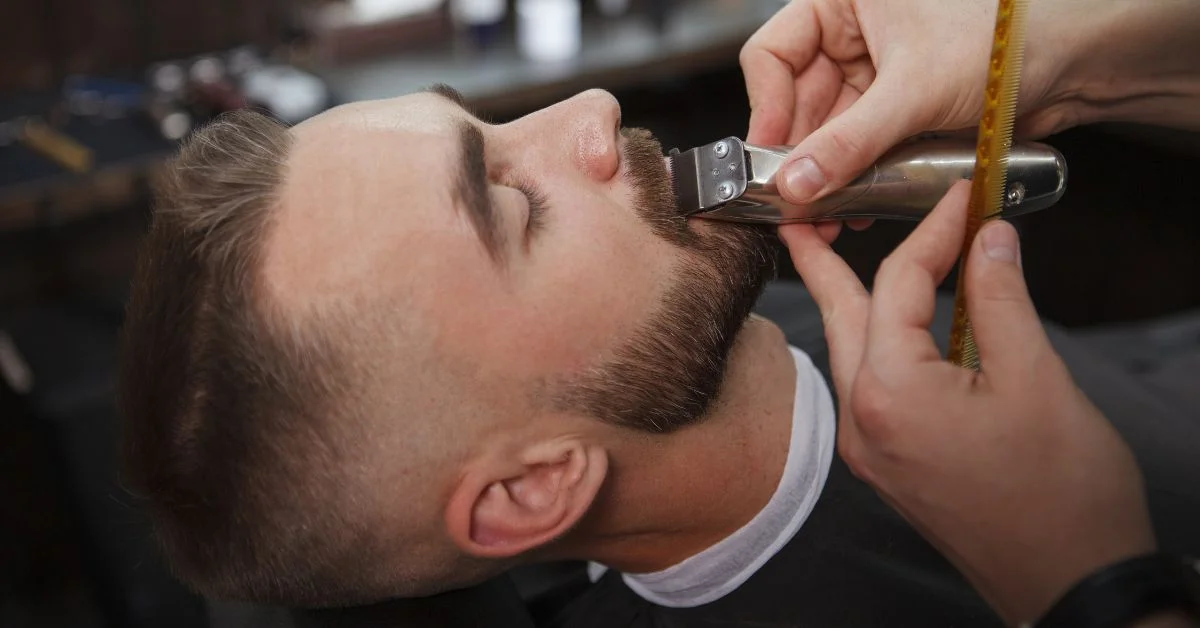
Most men who attempt a pencil moustache at home either cut it too thin, shave one side higher than the other, or lose the shape entirely within a week. The margin for error is smaller here than any other moustache style. Knowing how to trim a pencil moustache correctly, from the right tools to the exact technique, is what separates a sharp, intentional look from something that just looks like a shaving mistake.
A pencil moustache is a very thin, narrow strip of hair sitting just above the upper lip, defined by a clean lower edge along the lip line and a precise upper edge close to the nose. To trim it correctly, you shave or trim the surrounding areas first, define both edges with a precision trimmer or razor, and maintain perfect symmetry from the centre outward. The entire moustache width should be no more than three to four millimetres at its thickest point.
At HQ Barbershop in Dallas, our barbers shape and maintain pencil moustaches as part of our Moustache Trim in Dallas service. The precision required for this style is exactly what professional barbering delivers best. This guide explains the tools, growth time, trimming steps, maintenance routine and common mistakes involved in creating a clean pencil moustache
Pencil Moustache Trimming at a Glance
| Question | Quick answer |
|---|---|
| How thick should it be? | Approximately 3–5 mm vertically |
| How long should you grow it first? | Usually 2–3 weeks |
| Where should it end? | At or slightly inside the mouth corners |
| How often should surrounding stubble be shaved? | Every 1–2 days |
| How often should the outline be checked? | Every 5–7 days |
| What tools work best? | Precision trimmer, fine-tooth comb and single-blade razor |
What Is a Pencil Moustache?

The pencil moustache gets its name from its width. It is roughly as thin as a pencil line drawn across the upper lip. No bulk. No fullness. Just a precise, narrow strip of hair with clearly defined edges above and below.
The defining characteristics:
- Vertical thickness:A classic pencil moustache usually forms a narrow strip approximately 3–5 millimetres thick above the upper lip.
- Lower edge: A clean line sitting just above the upper lip.
- Upper edge: A defined line that creates the narrow moustache strip.
- Outer ends: Usually finish at or slightly inside the corners of the mouth.
- Centre: The Cupid’s bow may remain natural or receive a more geometric finish.
The style suits men with oval, square, and diamond face shapes particularly well. It adds definition to the upper lip area and draws attention to the mouth without adding bulk to the face.
How Long Does It Take to Grow a Pencil Moustache
Most men need approximately two to three weeks of upper-lip growth before they can identify the strongest and most even area for the pencil shape. Men with slower, lighter or uneven growth may need longer.
During this initial period, allow the full upper-lip area to grow. Do not try to create the final pencil line too early. Once enough hair is visible, identify the narrow 3–5 millimetre strip you want to keep and gradually remove the hair outside it.
The goal is not to preserve the entire full moustache. The temporary growth period simply helps you see where the hair is dense enough to support a clean and continuous pencil line.
Tools You Need to Trim a Pencil Moustache

The pencil moustache is not forgiving of the wrong tools. Precision here is not optional.
Precision Trimmer or Detailer
A precision trimmer or detail trimmer with a narrow blade is the primary tool for defining the edges of a pencil moustache. Standard beard trimmers with wide guards are too imprecise for a three to five millimetre strip of hair.
Choose a detail trimmer with a narrow blade that gives you clear visibility and control around the upper lip. A full-size clipper may feel too wide for the small corrections required by this style.
Straight Razor or Single-Blade Razor
For the cleanest possible edge definition, a straight razor or single-blade cartridge razor works alongside the trimmer. The trimmer removes bulk and sets the shape. The razor refines the edges to a clean, sharp line.
A professional barber may use a straight razor to create a highly defined outline. For home grooming, a precision trimmer or suitable single-blade razor generally offers more control.
Fine-Tooth Comb
A fine-tooth comb aligns the moustache hair before trimming and helps identify which hairs are growing outside the intended strip. Use it before every trim session.
Strong Direct Lighting and a Good Mirror
This matters more for the pencil moustache than any other style. Bathroom overhead lighting creates shadows directly over the upper lip, hiding the very area you need to see most clearly.
Use a well-lit mirror with front-facing light or natural daylight. Check from directly in front and from slight angles to catch asymmetry that a straight-on view misses.
Safety note: Straight razors require training and careful control, particularly around the upper lip. Do not attempt professional straight-razor techniques at home unless you have the appropriate experience. Use a safer grooming tool and stop if the skin becomes irritated or cut.
How to Trim a Pencil Moustache: Step-by-Step
This is the complete technique for how to trim a pencil moustache from scratch or from an existing moustache.
Step 1: Start With Clean, Dry Hair
Always trim dry. Wet hair looks longer than dry hair and you will cut more than intended. Wash the face, dry completely, and let the moustache hair settle before starting.
Step 2: Comb the Hair Downward
Comb all the moustache hair straight downward toward the lip. This shows you the true length, reveals the density of the growth, and identifies where the hair naturally sits above the lip line.
Step 3: Define the Lower Edge First

The lower edge of the pencil moustache sits just above the upper lip. This is the most critical line in the entire style.
Using your precision trimmer without a guard, or a single-blade razor, trim or shave the hair that falls below your intended lower edge. Work from the centre outward in both directions. The lower edge should follow the natural curve of the upper lip rather than being a perfectly straight horizontal line. A line that follows the lip looks intentional. A perfectly straight horizontal line can look artificial.
Take your time here. This edge is what the eye sees first. Any unevenness is immediately visible.
Step 4: Define the Upper Edge

The upper edge sits three to five millimetres above the lower edge. This is the top of the pencil moustache strip.
Using the precision trimmer, trim or shave everything above this line. The hairs between the upper edge and the base of the nose should be completely removed. Work slowly from the centre outward on both sides.
The upper edge can be straight across or very slightly curved. Both work. What matters is that it is even on both sides.
Step 5: Address the Cupid’s Bow
The Cupid’s bow is the natural dip in the centre of the upper lip where the two sides of the moustache meet. You have two options here. Leave it natural. The Cupid’s bow creates a slight V shape in the centre of the moustache. This is the more common and more natural-looking approach.
Trim it into a straight line. Remove the hairs in the V dip to create a continuous straight line across the full width of the moustache. This looks more geometric and precise. John Waters wears this version.
Step 6: Trim the Sides
The pencil moustache ends at the corners of the mouth. Using the precision trimmer, clean up the outer edges on both sides so the moustache terminates cleanly at the corners without stray hairs extending outward.
The sides should look like a deliberate endpoint, not a fade or a gradual thinning. A clean vertical edge on each side completes the shape.
Step 7: Check Symmetry

Step back from the mirror. Relax your face completely. Look directly at the moustache from the front. Check the lower edge, the upper edge and both sides. Look for any area where one side appears thicker, higher, or longer than the other.
Make one small correction at a time. A single hair’s difference can look significant at this scale. Trim only what you need to and check again before doing anything more.
Step 8: Final Clean-Up With Razor
Remove visible stubble immediately above and below the pencil moustache without cutting into the finished outline. Use light pressure and work slowly around the upper lip. Check the result from the front and both slight angles. The contrast between the clean surrounding skin and the narrow moustache creates the style’s definition.
Once the outline looks balanced, stop trimming. Repeated final corrections often make one side progressively thinner.
How to Maintain a Pencil Moustache
A pencil moustache requires more frequent edge maintenance than a fuller moustache because even light stubble can soften its outline.
Shave or clean the surrounding skin every one to two days, depending on how quickly your facial hair becomes visible. Check the upper edge, lower edge and outer ends every five to seven days, but avoid reshaping the entire moustache during every shave.
Comb the hair before making corrections and remove only the strands that sit outside the established line. If one side becomes noticeably thinner, stop trying to match it by cutting the other side. Allow the shorter area to grow back before correcting the overall shape. If you wear your moustache alongside a beard, our how to trim moustache with beard guide covers how the pencil moustache works in combination with different beard lengths and styles.
Which Face Shapes Suit the Pencil Moustache
Face shape can help guide the length and proportion of a pencil moustache, but it should not be treated as a strict rule. Hair density, mouth width, natural growth direction and personal style also affect the finished result.
Oval face shapes
Oval faces often suit the classic version because their balanced proportions support a narrow moustache without making it dominate the face.
Square face shapes
A pencil moustache can complement the defined angles of a square face, particularly when both sides remain clean and even.
Diamond face shapes
The horizontal line above the mouth may add visual balance through the centre of a diamond-shaped face.
Round face shapes
Men with rounder faces may prefer slightly shorter outer ends so the moustache does not create excessive horizontal width.
Long or oblong face shapes
Men with longer faces can experiment with a classic or slightly wider outline. The best length should be decided by overall facial proportions rather than a fixed rule.
Common Mistakes When Trimming a Pencil Moustache
These come up repeatedly and are all avoidable once you know what to watch for.
Making it too thin. There is a minimum width below which the moustache stops looking intentional and starts looking like a shaving miss.
How to avoid it: Establish the lower edge first and remove hair from the upper edge gradually.
Uneven edges. One side sits higher than the other, or the lower edge curves more on one side. This asymmetry is immediately visible because the pencil moustache has so little visual information that every element carries proportionally more weight.
How to avoid it: Work from the centre outward and compare both sides after every small adjustment.
Trimming wet hair. Already covered for every moustache style, but for the pencil moustache, trimming wet is especially problematic because the margins are so small.
How to avoid it: Wash first, dry completely and wait until the hairs settle naturally.
Not shaving the surrounding area regularly. Stubble growth around the moustache blurs the edges within forty-eight hours.
How to avoid it: Clean the surrounding area regularly without repeatedly reshaping the moustache itself.
Pressing the trimmer too hard against the skin. Light contact only. Pressing the blade against the skin removes hairs that should stay and can nick the skin along the edge you are trying to define.
How to avoid it: Use light contact and let the blade remove the hair without pushing it into the skin.
Pencil Moustache vs Other Moustache Styles
Understanding where the pencil moustache sits relative to other styles helps clarify whether it is the right choice.
| Style | Main shape | Edge definition | Typical maintenance |
|---|---|---|---|
| Pencil moustache | Narrow and minimal | Sharp upper and lower edges | Frequent outline cleaning |
| Natural moustache | Follows normal growth | Soft or minimally shaped | Light regular trimming |
| Chevron moustache | Thick, full and wide | Clean lip line with fuller body | Length and lip-line control |
| Handlebar moustache | Longer outer ends with curls | Defined centre and styled ends | Trimming plus regular styling |
Our guide on how to trim a handlebar mustache covers the handlebar technique in full for men considering both options. For a complete overview of moustache trimming technique across all styles, our how to trim a moustache properly guide gives the full picture.
When a Professional Barber Should Trim Your Pencil Moustache
Getting the first shape done correctly by a skilled barber gives you a precise template to maintain at home. The barber sets both edges, confirms the width and placement suits your face shape, and leaves you with a clear visual reference for every future home trim.
If your pencil moustache has grown uneven or you have over-trimmed one side, a professional correction is faster and more accurate than home adjustments. Chasing asymmetry at home with a precision trimmer often makes the situation worse.
At HQ Barbershop, we provide professional pencil moustache shaping as part of our Moustache Trim in Dallas service. Our barbers can establish the initial width, balance both sides and create a clear outline that is easier to maintain at home.
Visit us at 3527 Oak Lawn Avenue in Dallas. Walk-ins are welcome, or you can book ahead for your preferred appointment time.
FAQs: How to Trim a Pencil Moustache
How thin should a pencil moustache be?
Three to five millimetres is the standard range. Thinner than three millimetres risks looking like a shaving accident rather than a deliberate style. Wider than five millimetres starts becoming a natural moustache rather than a pencil. Three to four millimetres hits the classic pencil moustache proportions for most men.
How often do I need to trim a pencil moustache?
The surrounding skin needs shaving every one to two days to keep the edges sharp. The moustache itself needs a full shape trim every five to seven days. This is the most maintenance-intensive moustache style in terms of frequency, though each session is short.
Can I grow a pencil moustache if my facial hair is patchy?
It depends on where the patches are. If the hair above the upper lip grows evenly in a strip three to five millimetres wide, patchiness elsewhere does not matter. If the upper lip area itself is patchy, the pencil moustache will look interrupted. Allow four to six weeks of full growth before deciding if the density is sufficient.
What is the difference between a pencil moustache and a thin natural moustache?
A pencil moustache has defined, precise edges on both the top and the bottom, creating a deliberate strip of hair with clear boundaries. A thin natural moustache has no defined edges and simply grows without shaping. The pencil moustache is a specific, intentional style. A thin natural moustache is an unmaintained one.
Should the pencil moustache touch the corners of the mouth?
For most face shapes, yes. The classic pencil moustache extends to the corners of the mouth. For round or very wide faces, stopping slightly inside the corners of the mouth creates better proportion. The width should always be considered relative to the face shape rather than following a fixed rule.
Conclusion
Learning how to trim a pencil moustache comes down to control. Work on dry hair, establish the lower edge first, create an even 3–5 millimetre strip and make every correction from the centre outward. Small adjustments protect the shape better than repeated passes with the trimmer.
Once the outline is established, keep the surrounding skin clean and check the shape every five to seven days. If the moustache becomes uneven or you are creating the style for the first time, a professional trim can give you a balanced template to maintain at home.
HQ Barbershop provides precise pencil moustache shaping through our Moustache Trim in Dallas service. Visit us on Oak Lawn Avenue for the initial shape, an outline correction or regular maintenance.
Book your Moustache Trim in Dallas at HQ Barbershop today and get the pencil moustache done the way it should be.